
A serviced office viewing goes well when you arrive with questions rather than hoping the right answers surface during the tour. A room can photograph beautifully and still fall down on noise, light, temperature, Wi-Fi coverage, shared areas or parking, none of which show up in a listing. Treat the viewing as a test of how the office works on a normal Tuesday, not a quick look at an empty room, and you will decide faster and better.
If you are still comparing options, start with our serviced offices in Cardiff, because the service model matters as much as the four walls. Then bring the checklist below to every viewing you book.
- Before you goWrite down headcount, daily attendance, call volume, storage and the budget limit. Ten minutes at your desk sharpens the whole tour.
- On the dayTest the Wi-Fi at the far desk, listen with the door open, walk the toilets, kitchen and car park. Judge the building, not the room.
- Before you leaveGet the licence answers while you are standing there: term, notice, what is included, what is charged separately, and what happens when you grow.
Decide what you need before you book a viewing
Preparation starts with what the business actually needs, not with what looks nice. Team size, attendance pattern, call volume, visitors, storage, meeting habits and growth plans all shape whether a room fits. Write them down first and the viewing gets shorter and sharper, because you stop being seduced by rooms that look good and suit someone else.
Purpose comes before preference. A founder moving out of the spare bedroom needs a different setup from a sales team, a consultancy or a company opening its first Cardiff base. The office should match how the work happens, not just the number of desks on the floor plan.
Daily attendance beats total headcount. A hybrid team of ten might only need six desks most days, but the room still has to cope on the busiest one. Know that gap before you walk in.
Set the budget before you arrive, too. Monthly cost, deposit tolerance, parking, meeting room use and likely extras all decide whether a space is genuinely affordable or just tempting. It is far easier to hold a limit you set at your desk than one you try to invent while standing in a room you have already started to like.
Suites at Alexandra Gate, by how many people actually turn up
Swipe to compare → tap any card
A viewing is not a room inspection
You are viewing an environment, not a room. The private office matters, and so do the building, the shared areas, the Wi-Fi, the toilets, the parking, the reception and the people who run the centre. Check only the walls and desks and you miss most of what your team will notice every day.
Serviced offices are sold on service, so test the service. The whole point is a managed space with support already in place, which means the tour should probe how the centre is run as much as how the room looks. Photographs hide plenty: a room that reads clean and bright online can feel warm, dark or noisy in person, and a short visit with the right questions surfaces that.
The building shapes first impressions before anyone reaches your door. Clients, candidates and suppliers experience the reception, the corridor and the car park first, so decide whether that arrival supports the image you want. And keep it structured. A viewing without a plan drifts into a friendly chat and a few vague impressions. A viewing with a checklist leaves you holding real information you can compare later.
Judging the size of the office
Judge size by how the team uses the room when it is full, not by how roomy it feels empty. Desk count is only the start. Chair movement, screen depth, storage, walkways, calls, visitors and the next hire all decide whether the office stays comfortable.
Shape often matters as much as floor area. A square, well-proportioned room can beat a larger one with awkward corners, wasted wall space or a badly placed door. Picture the actual desk layout instead of trusting a capacity claim.
Test movement while you are there. Chairs need to slide back. People need to pass behind desks. Storage should not block a walkway. A room that only works when nobody moves is the wrong room. And count the storage in: filing, a printer, samples, coats, spare screens and deliveries all shrink a room, and businesses that ignore this end up cluttered before the first month is out.
Be honest about growth. One spare desk is sensible if a hire is genuinely near. Four spare desks is wasted rent if the growth is only a hope. Size for the next sensible step, not an imaginary future.
How much room does a team of six actually need?
Count the desks, then add the printer, the coats, the deliveries and a metre behind every chair. Suites here run 80 to 1,200 sq ft and take 1 to 30 people, so the honest answer usually sits one size up from the number in your head.
What to check about noise
Noise is one of the easiest things to miss on a viewing and one of the hardest to live with afterwards. A perfect-looking room fails if corridor traffic, a phone-heavy neighbour, road noise or thin walls cut across the working day. Listen properly rather than assuming the quiet you hear at 10am is the quiet you get at 3pm.
Position is the first clue. A room by an entrance, kitchen, lift, toilet or reception picks up more footfall, which does not rule it out but should be understood before you sign. The neighbours matter too: a quiet admin firm sounds nothing like a sales floor or a training room with visitors coming and going, and the centre team should be able to tell you what normally happens around the office.
Test call privacy in practical terms. Sales calls, client discussions, finance and HR all need a sensible level of sound control, so if your team handles confidential work, ask directly about separation between rooms. If you can, ask when the building is busiest, and whether a second viewing at that time would give you a truer feel.
What to check about natural light
Light is easy to admire for ten seconds and far more important after several full days at a desk. It drives comfort, concentration, screen glare and the general mood of a room. A space that feels bright and balanced tends to support better work than one that only looks fine under the strip lights.
Window position comes first. Good daylight still causes glare if desks have to face the wrong way, so think about where the monitors will actually sit. Check the artificial lighting as well, since dim corners, harsh overheads and odd shadows all shape how a room feels over a long day.
Season counts in Cardiff. A room with limited daylight feels more draining through the darker months, while strong direct light can bring glare and heat in summer. People tolerate a lot for a short tour and much less across a working week, so let the light guide the decision rather than the first impression.
What to check about temperature and ventilation
Temperature quietly turns a smart office into a place people dislike working. Comfort depends on heat, airflow, cooling, radiator control and whether windows open, and rooms behave differently at different times of day. Ask how the centre manages it rather than assuming the room stays as it feels right now.
Orientation affects heat: a south-facing room with big windows and a rack of equipment warms up, so a space that is pleasant at 9am can be stuffy by mid-afternoon. Find out how heating is controlled, whether it is central, room-based or on a timer, so you know how comfort is handled day to day.
Airflow matters most in call-heavy or meeting-heavy rooms, where several people, closed doors and multiple screens make a compact office feel stale. Check whether windows open and whether there is air conditioning. Then ask the question that actually predicts your experience: how quickly does the centre team respond when a room becomes uncomfortable, because every building has an off day and the response is what counts.
- Windows open, or air conditioning is in the room itself
- Heating can be adjusted without phoning anyone
- The room stays quiet with the door open
- Someone answers “how fast do you fix it” with an actual timeframe
- Nobody can say who handles a fault, or how quickly
- A radiator with no working valve and no other control
- Stale air, sealed windows and no cooling
- Vague answers about noise from the neighbouring suite
Broadband checks during the viewing
Go past the promise that the office “has internet”. Speed matters, reliability matters more, and constant connection problems wreck productivity faster than almost anything else you can get wrong here.
Check speed in context. An admin team, a video-heavy consultancy and a creative agency all need different things, so ask about typical speed and whether upgraded options exist. Then push on stability, because a connection that tests fast once can still drop during calls or crawl when the building fills up. Ask how the centre monitors the service and what happens when there is a fault.
Test the Wi-Fi in the actual room. Use your phone or laptop to check signal near desks, corners and any likely workstation, since weak coverage in the far corner may not matter, or may matter enormously if that is where two people will sit all day. Confirm guest access for client meetings and interviews, and finish on support: who fixes internet problems, how fast, and is there a clear route to report them. A strong connection is worth a lot. A strong support process is what lets you relax.
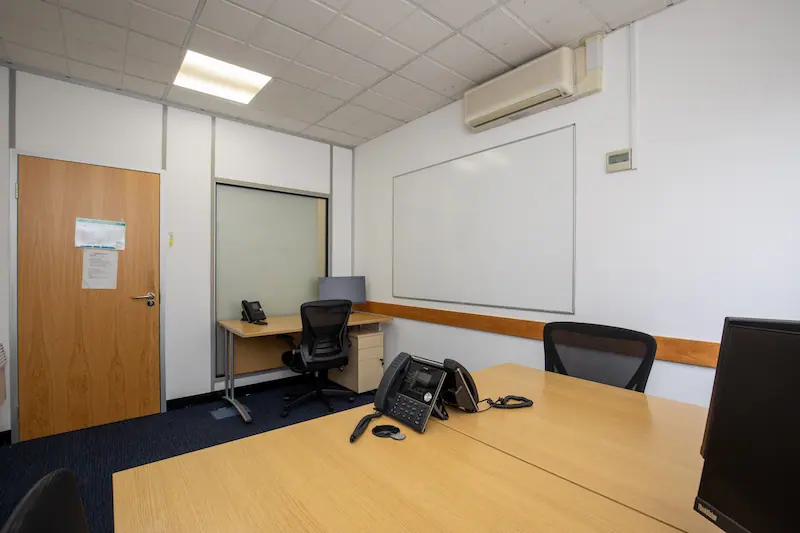 Ffordd Pengam
Bring a laptop and check the corner nobody shows you
Reliable broadband, free parking and 24/7 access are all standard in our serviced offices in Cardiff. The quickest way to judge them is in person, so call 029 2089 4700 and we will walk you through a room set up the way your team would use it.
- Fibre from shared up to 500 Mbps
- 24/7 fob access and CCTV
- Daily cleaning, weekday reception
- Free parking, no permit
- Suites from 80 to 1,200 sq ft
What to check in the shared areas
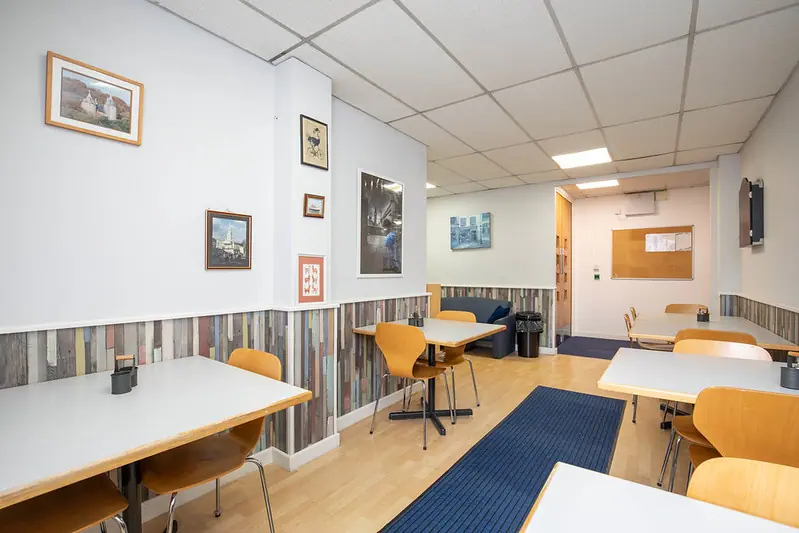
Shared areas often say more about a building than the private office does. Reception, corridors, kitchens, breakout space, toilets, lifts and entrances all shape how professional and comfortable the centre feels, and a good private room does not rescue weak shared space.
Reception makes the first impression, because visitors judge the centre before they ever see your room. A clean, organised, helpful front desk makes a business look established from the moment someone arrives. Kitchens and breakout areas matter for staff, who need somewhere to make a drink, eat lunch and step away from a screen; these do not need to be flashy, but they do need to feel clean and looked after. Corridors and entrances send the same signal through lighting, signage and general upkeep, so pay attention to them.
Look at a meeting room even if you are mainly viewing an office. Shared meeting space cuts the amount of private room you need to pay for and lifts the client experience, which is where meeting room hire in Cardiff becomes relevant for anyone planning client visits or team sessions.
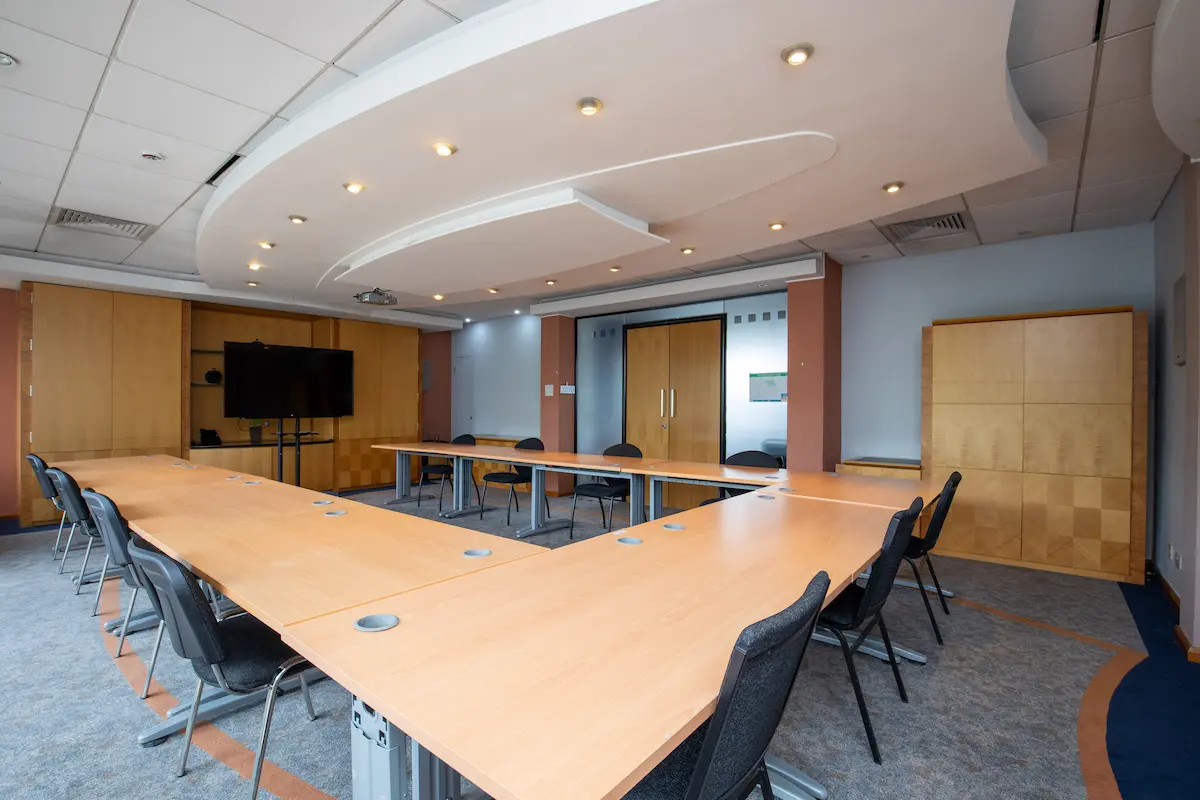 Ask to see it
Ask to see a meeting room even if you are viewing an office
Ask to see a meeting room even if you are viewing an office. Shared rooms are the cheapest way to keep a small suite workable, and they are also the room your client will actually sit in. Compare meeting room hire →
Cleaning standards
Cleaning is one of the clearest signs of how well a serviced office is actually run. The office should feel properly maintained in both private and shared space, and you should not feel awkward checking it, because cleanliness is part of what the monthly fee buys.
Toilets are the fastest indicator. Clean, stocked and well-kept usually means the building is managed with care, and poor standards there raise bigger questions about everything else. Give kitchens the same look: bins, surfaces, sinks and general smell tell you whether the cleaning process holds up when tenants are busy. Ask what the private office cleaning covers, how often it happens and what stays your responsibility. Common areas count too, because a tired entrance or a scruffy lift undermines a client-facing space no matter how smart your room is.
“Always found the experience 1st class.”Google review, Alexandra Gate Business Centre
Cleaning, maintenance and response speed are the parts of a building you cannot judge in twenty minutes. The people already working here have judged them for years, which is the closest thing to a second viewing you will get.
Toilets and accessibility
Toilets and accessibility deserve real attention, because staff and visitors use the whole building, not only your office. It is easy to focus on the room and forget the routes people take, and that gap creates problems later for a visitor, an employee or a candidate.
Location matters first: staff should not take an awkward route to reach the facilities, and visitors should find them easily. Check accessibility with real people in mind, since entrances, lifts, doors, corridors, toilets, parking and meeting room access all decide whether the building works for everyone. You may have no accessibility requirement today and gain one tomorrow with a new hire or client, so ask directly rather than assume. Clear signage helps too, because a building that is easy to move through reads as more professional.
Parking and visitor arrival
Parking shapes the first impression before anyone reaches your office door, and in Cardiff it varies enormously. A professional office loses much of its value if clients cannot find the building or park without stress.
This is a genuine strength of an east Cardiff location. Alexandra Gate sits on Ffordd Pengam in Pengam Green, CF24 2SA, with free on-site parking, which is rare closer to the city centre where visitors hunt for a paid space and arrive irritated. We are minutes from the A48 and A4232, roughly ten minutes from the city centre, and close to the M4 at junctions 29 and 30, so clients coming from Newport, Penarth, Barry or Caerphilly reach us without a city-centre crawl.
At any viewing, get the parking answer straight before signing: how many spaces, whether they are included, whether there is visitor parking and whether any charges apply. Think about public transport and road access for staff and clients arriving from across Cardiff and South Wales. Check the reception flow, so guests know where to enter, where to wait and how you will be told they have arrived. And ask about deliveries, because couriers, post and equipment need a clear route if you receive regular items.
 Free parking
Park outside the door, then decide what the client sees
Walk the route your visitor will take before you sign anything: the car park, the entrance, the reception desk, the corridor. Ten minutes on that route tells you more about the building than a floor plan ever will.
- Free spaces for staff and visitors
- Electric car charging on site
- Minutes from the A48, A4232 and M4
Ask about meeting rooms before you sign
Meeting rooms change the value of a serviced office, so raise them on the viewing rather than treating them as an afterthought. Shared meeting access makes a smaller, cheaper office genuinely workable.
Clarify what is included first: are meeting rooms part of the licence, discounted, charged hourly or booked separately, because that shifts the real monthly cost. Check size and layout against how you meet, and view at least one room if meetings are likely. Ask about the technology, since weak meeting-room Wi-Fi, screens or video kit makes a good office feel limited. Then understand the booking process, because a room is only useful if you can get it when you need it, so ask how far ahead rooms fill and how the centre handles busy weeks.
Ask about the licence terms
A good-looking office still has to make commercial sense once the agreement is signed. Flexible serviced office licences are simpler than a traditional lease, but the detail matters, and no viewing should end with a decision based only on how the room feels.
Get the minimum term clear, and what happens at renewal. A short term costs more but keeps you flexible; a longer one improves value but leaves less room to move. Understand the notice period properly, because growth, downsizing and a shift to more hybrid working all change what you need, and a sensible agreement makes it clear how you leave or change space. Ask for the included costs in a list: rent, service charge, utilities, broadband, cleaning, reception, furniture, parking, meeting rooms and how VAT is treated.
Start-ups should be especially careful here, because the first office decision shapes cash flow and flexibility for months. Our guide to deposit, notice and exit terms on a Cardiff office licence is worth reading before you commit to anything.
Ask about future growth
Today’s perfect room can become next year’s tight fit, so put growth on the viewing agenda. Serviced offices are attractive precisely because they make growth easier, but only if the centre has real options.
Ask what happens when tenants outgrow a room. The centre may have larger offices, adjacent rooms or the ability to add space later, and a business expecting to hire soon should know the usual path. Talk about downsizing too, because plans change and hybrid working can cut attendance, so ask whether smaller rooms come up. Meeting rooms and shared areas can absorb occasional needs without an early move, which protects budget during a growth stage. And if you might later want a Cardiff address without a full office, or more formal meeting facilities, check the centre can support that, which is where virtual office services in Cardiff fit into the wider plan.
If your team is likely to start small, our two-person office in Cardiff is a sensible first step with room to move up as you grow.
What to notice about the centre team
Serviced offices run on people as much as property, so watch the team. Reception, building management, maintenance response and general helpfulness all shape life after move-in, and a good room with poor support still turns frustrating.
The viewing is the first clue. Clear communication, useful answers and a practical tour suggest a centre that understands business needs, while vague or rushed replies should prompt more questions. Reception manner matters because clients often meet the centre team before they meet you. Ask how the team handles heating issues, internet faults and maintenance, because those things happen in every building and the handling is what differs. You want to leave feeling the team understood your business, not just the room they had to let.
Quick checks you can do on the day
You do not need to behave like a surveyor. A few simple tests reveal more than a brochure.
- Phone signal: check it in the office and the shared areas, because poor mobile coverage gets annoying fast.
- Wi-Fi: run a quick connection test near likely desk positions, then still ask about formal broadband quality.
- Noise: listen with the door open and closed if you can, so corridor and neighbour sound become obvious.
- Temperature: feel it, do not just ask. A room that already feels warm, cold or stale deserves follow-up.
- Shared facilities: walk them. See the toilets, kitchen, reception, meeting rooms and parking rather than taking them on trust.
Come at your awkward hour, not our convenient one
Ask for the tour at 8am or 5pm if that is when your team works. You will learn more about noise, parking and the building at the busy edge of the day than at eleven on a quiet Tuesday.
Questions to ask before you leave
Ask the important questions while the space is fresh, not on the drive home.
Cost: What is included and what is extra? Is VAT added? Are meeting rooms, parking, cleaning, broadband, furniture and utilities part of the monthly fee?
Use: How many people does the office comfortably take? How does meeting room booking work? What are the access hours? How are visitors handled?
Support: Who handles internet faults and maintenance? How often is cleaning done? What happens if you need a bigger or smaller room later?
Decision: What is the availability, how long can the room be held, and what is the next step? A clear route to book a viewing or move forward keeps the decision from stalling.
A serviced office viewing checklist you can follow
Copy this into your notes app before you visit any Cardiff serviced office.
- Does the room fit the team comfortably now
- Does it still work with one or two more people
- Can chairs move back without blocking walkways
- Room for storage, printers, bags and spare kit
- Does the layout support calls, quiet work and collaboration
- Quiet enough with the door open and closed
- Enough natural light for a full day
- Will screen glare be a problem
- Does it feel too warm, cold or stale
- Can heating, cooling or airflow be adjusted
- Typical broadband speed
- Stability during busy periods
- Wi-Fi strength across the whole room
- Guest Wi-Fi for visitors
- Who handles faults, and how fast
- Reception, corridors, kitchens and toilets clean
- Shared areas easy for visitors
- Meeting rooms available when needed
- Suitable access for mobility needs
- Does the wider centre feel well managed
- Exactly what the monthly price includes
- What is charged separately
- VAT included or added
- Minimum term and notice period
- Can you move to a larger or smaller room later
- Parking for staff and visitors
- Easy to find
- How guests are received
- How deliveries and post are handled
- Would the team still like it in six months
Comparing two offices after the viewings
Compare on working value, not the room that looked best first. A bright office with poor parking can still be the wrong choice, and a cheaper room with weak Wi-Fi can cost more in lost time than it saves in rent.
Score each office against the same list, side by side: space, noise, light, comfort, broadband, shared areas, parking, support, contract terms and total cost. That takes the emotion out of it. Weight what matters to you, so a call-heavy team leans on internet and noise, a client-facing firm on arrival, reception and parking, and a growing start-up on flexibility and future room. The best office usually works for the whole business, not just the person who enjoyed the tour most.
FAQs
What should I check when viewing a serviced office in Cardiff?
Look past the room to noise, natural light, temperature, broadband, shared areas, cleaning, parking and the licence terms. Test the Wi-Fi and phone signal at likely desk positions, walk the shared facilities, and ask who handles faults and how fast.
How long does a serviced office viewing take?
Usually 20 to 40 minutes for one centre if you arrive with a checklist. Bring your list of must-haves and the questions above, and you will get useful answers instead of a polite walk-round. To arrange one at our Pengam Green centre, call 029 2089 4700 or use our contact page.
What questions should I ask about the licence before signing?
Confirm the minimum term, notice period and what is included: rent, service charge, utilities, broadband, cleaning, reception, furniture, parking and meeting rooms, plus how VAT is treated. Our guide to deposit, notice and exit terms covers the detail.
Is there parking when I view an office at Alexandra Gate?
Yes. We have free on-site parking at CF24 2SA in east Cardiff, with quick access from the A48 and the M4 at junctions 29 and 30. It is easy to reach from Newport, Penarth, Barry and Caerphilly.
Can I move to a bigger or smaller office later?
Ask this on the viewing. We run serviced offices for 2 to 30 people, so many businesses start in a smaller room such as the two-person office and move up as they grow, using meeting rooms to absorb occasional needs in between.
Four things to settle before you book the tour
Choosing the office that still feels right after move-in
Treat the viewing as a working test, not a tour, and you will choose well. Alexandra Gate Business Centre fits that approach, because the decision is not only about finding an office. It is about finding a professional Cardiff workspace that helps the team work well and welcomes clients properly.
A good viewing lets you picture a normal working day in the space. The right serviced office feels comfortable, connected, clean and easy for visitors to use, fits the budget, and leaves room for the next stage of the business. Rushed decisions create avoidable problems, and the details that get skipped, noise, broadband, cleaning, temperature, parking, licence terms, are exactly the ones that bite after move-in.
Tell us your headcount and how the team works, and we will set the room up that way for the tour.
Explore serviced offices in Cardiff →