
A training room suits sessions where 10 to 25 people need to learn, take part, use laptops, move around and stay comfortable for several hours. A meeting room suits discussions, decisions, interviews, board sessions and client conversations where the group stays focused around a table. The right choice follows the purpose of the session, the layout, how long people stay, the equipment you need and how much the group moves.
Planning a session for that group size? Our team at Alexandra Gate hires meeting and training rooms in Cardiff with free on-site parking and a proper visitor flow. Call 029 2089 4700 and we will point you to the room that fits the day.
The main difference between a training room and a meeting room
The difference is purpose. A training room is built around learning, participation and longer sessions. A meeting room is built around discussion, decisions and focused conversation.
A meeting room works when everyone needs to speak, listen, review documents or decide around one table. It gives control, privacy and clear conversation, which suits client meetings, board meetings, partner discussions, interviews and short planning sessions.
A training room supports movement. Attendees use laptops, write notes, work in pairs, face a screen, run exercises, ask questions and take breaks. The room has to work for energy as much as seating. A layout that feels fine for a one-hour meeting can feel cramped across a full training day.
Start from the outcome. Choose the room by what people need to do, not only by how many chairs fit.
Training room vs meeting room: quick comparison
Two rooms can both hold 20 people and still perform very differently for the same session.
Three point to a training room, one to a meeting room, three depend on the session
Scroll the table → hover any row to focus it
| Decision point | Training room | Meeting room |
|---|---|---|
| Best useDepends on session | Workshops, CPD, onboarding, group learning | Board meetings, interviews, client sessions, planning |
| LayoutDepends on session | Classroom, workshop, cabaret or flexible | Boardroom, meeting table or presentation |
| MovementTraining room | Better for activities, breaks and group tasks | Better for seated discussion |
| EquipmentTraining room | Screen, Wi-Fi, flipchart, whiteboard, laptop use | Screen, Wi-Fi, presentation support |
| Session lengthDepends on session | Better for half or full days | Better for shorter focused meetings |
| CapacityMeeting room | Needs more space per person | Works with tighter seating |
| Comfort needTraining room | Higher, people stay longer | Depends on meeting length |
When to choose a training room
Choose a training room when the session involves teaching, learning, group participation or several hours in the same space. The room has to help you keep people engaged, not just seated.
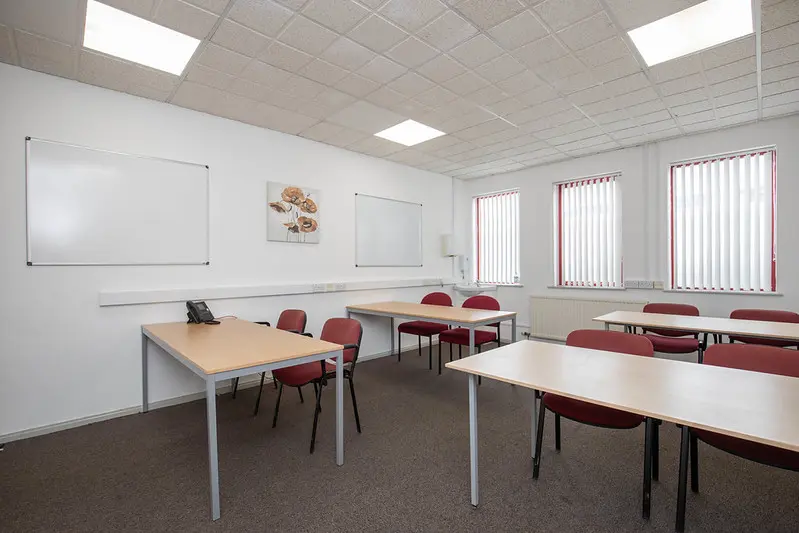
Training rooms suit onboarding, staff development, CPD, customer workshops, product training, software demonstrations, leadership sessions and group exercises. These need a screen, clear sightlines, space for laptops, table room for notes and space for the trainer to move.
A group of 10 can still need a training room if the session is active. A group of 25 needs careful layout planning from the start, because a room that fits 25 chairs may not work once laptops, bags, refreshments, movement and group tasks are added. The question is not “can the room fit 25 people?” It is “can 25 people work comfortably in this room for the session we are planning?” We size that up in room capacity for up to 25 people explained.
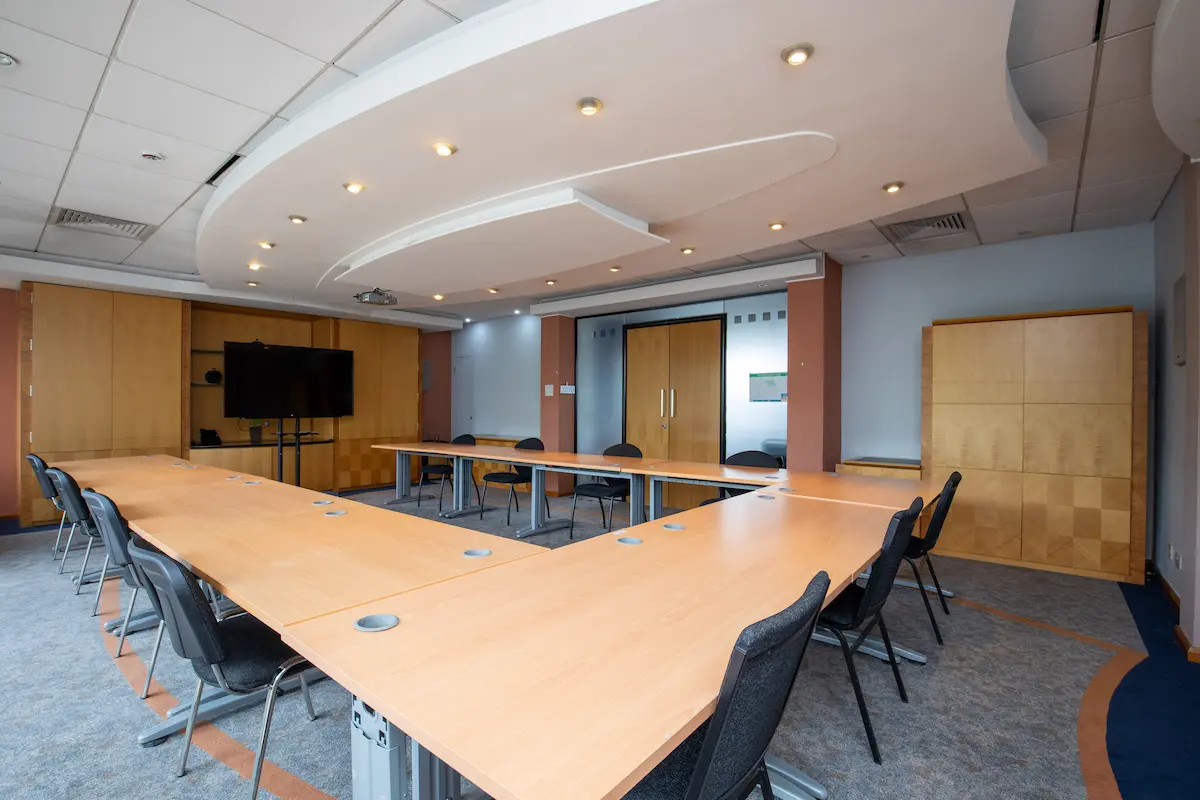 Set before you arrive
The room gets laid out for the session you described
Say whether people are on laptops, working in groups or sitting through a presentation, and the tables, screen and space at the front get set for that before the first person walks in.
- Classroom, workshop, cabaret or boardroom setups
- Screen, whiteboard and flipchart on site
- Organiser access ahead of the group
When a meeting room is enough
A meeting room is enough when the group mainly needs to talk, listen, decide or present without much movement. It works best with a clear agenda and little physical activity.
It suits leadership meetings, client presentations, sales pitches, interviews, project reviews, board discussions, partner meetings and strategy sessions, where the group wants privacy, a screen, a table and a calm setting. Our modern boardroom is built for exactly that kind of focused, seated session. A meeting room can also handle a short workshop, especially when the group is closer to 10 and the format is mostly discussion. It gets less suitable once you need breakout tasks, laptop work, practical exercises or hours of teaching.
The risk is booking a meeting room for a training session purely because the headcount fits. A room can hold the people and still fail the session.
Capacity for 10 to 25 people needs real space planning
Judge capacity by working space, not maximum seating. A room listed for 25 feels different once people arrive with coats, bags, laptops, notebooks and drinks.
A group of 10 works well in a meeting room with space around the table. A group of 15 needs more layout planning if everyone uses laptops. A group of 20 to 25 usually needs a training room or a flexible setup when the session runs half a day or longer.
Think about what each person needs at their seat. Laptops need power and table space. Printed workbooks need room. Activities need space between groups, and comfort matters more as the day stretches on. The rule is simple: the more people need to do, the more space they need. Sitting and listening needs less. Writing, learning, discussing and moving need more.
Book the session room, or the base you run it from
Swipe to compare → tap any card
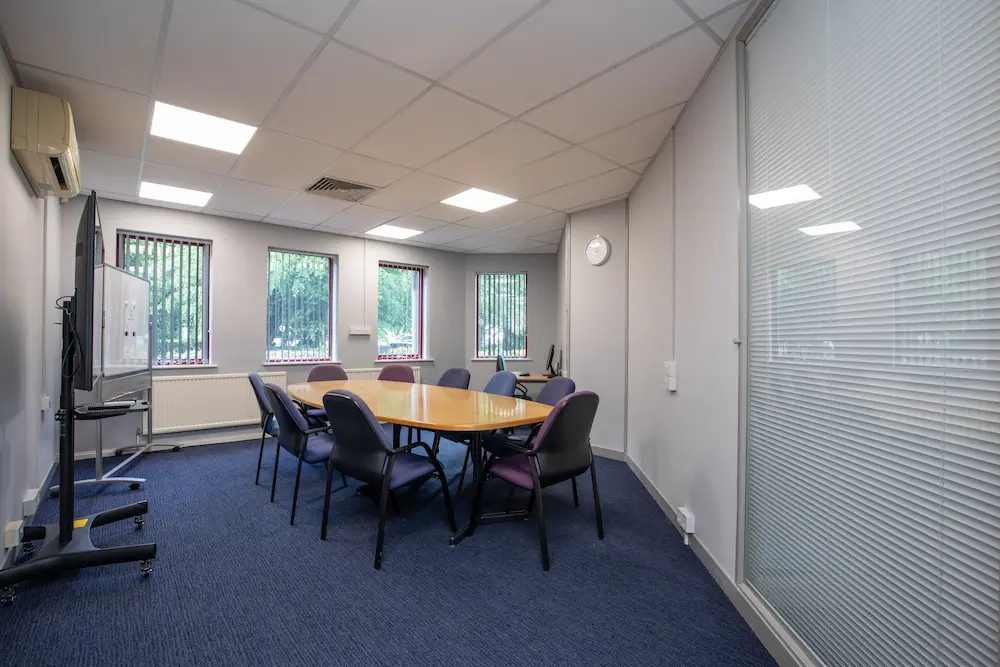 Seats up to 12Training room
Around 350 sq ft, laid out for laptops, workbooks and a trainer who moves.
Hire a training room →
Seats up to 12Training room
Around 350 sq ft, laid out for laptops, workbooks and a trainer who moves.
Hire a training room →
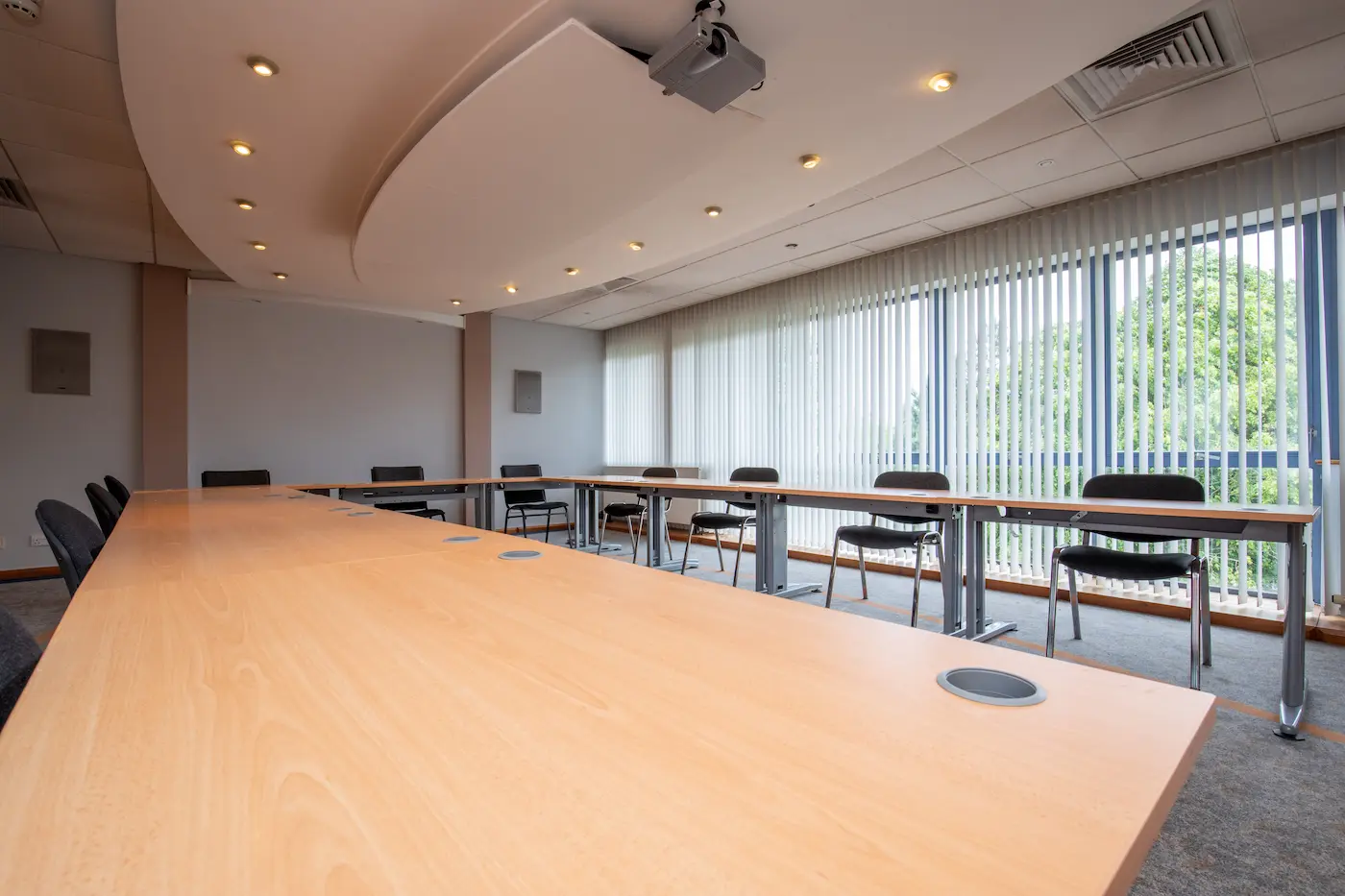 Seats up to 25Modern boardroom
Private floor with lift access, projector, whiteboards and its own WC.
Schedule the boardroom →
Seats up to 25Modern boardroom
Private floor with lift access, projector, whiteboards and its own WC.
Schedule the boardroom →
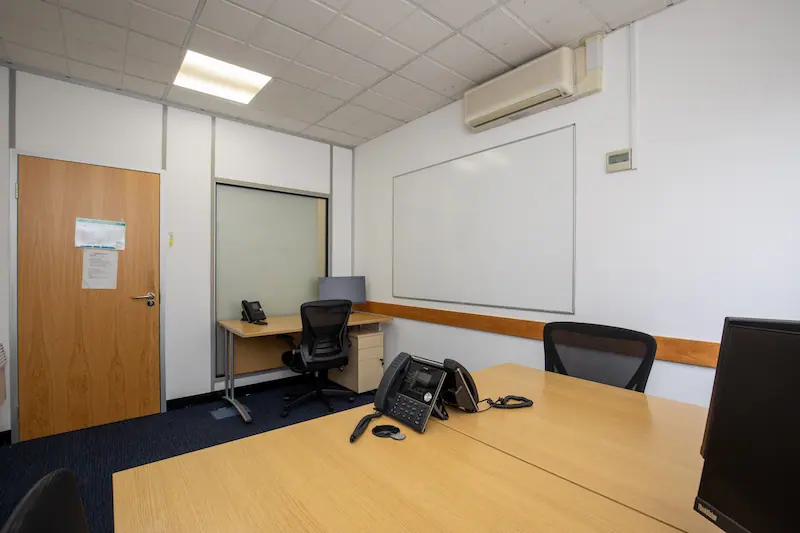 2 to 30 peopleServiced offices
Suites from 80 to 1,200 sq ft when the sessions become a weekly habit.
Compare the serviced offices →
2 to 30 peopleServiced offices
Suites from 80 to 1,200 sq ft when the sessions become a weekly habit.
Compare the serviced offices →
 Up to 6 peopleSix person office
A base for the team delivering the training, rooms booked downstairs.
View the six person office →
Up to 6 peopleSix person office
A base for the team delivering the training, rooms booked downstairs.
View the six person office →
 Open plan teamLarge bright office
Natural light and floor space when a department needs its own room.
Explore the large bright office →
Open plan teamLarge bright office
Natural light and floor space when a department needs its own room.
Explore the large bright office →
 No desk yetVirtual office
A CF24 2SA address, with rooms to book on the days you deliver.
Take a Cardiff address only →
No desk yetVirtual office
A CF24 2SA address, with rooms to book on the days you deliver.
Take a Cardiff address only →
Layout should match the session goal
Layout changes how a room feels and how well the session runs. The wrong layout makes a good room feel awkward.
A boardroom layout works for discussion and decisions: everyone sees each other and the table creates focus. It is weaker when attendees need to face a trainer for long stretches or split into small groups.
A classroom layout works for training that needs tables, notes and clear sightlines to a screen, though it makes open discussion less natural.
A workshop or cabaret layout helps with group tasks and interaction, but it reduces how many people the room holds comfortably.
Settle the layout before you book. It is not decoration. It shapes attention, comfort and outcomes, so ask your provider which setups a room supports for your group size.
Equipment can decide whether the day runs smoothly
Confirm equipment before you book, especially for training. A room that looks right still causes problems when the screen, Wi-Fi or adapters do not match what you need.
Most sessions want Wi-Fi, a screen, HDMI access, power points, a flipchart, whiteboard, pens and enough table space. Training often adds presenter space, spare adapters, printed materials, reliable audio or room for demonstrations. Meeting rooms need fewer items, but the basics still matter: a client presentation feels unprepared if the laptop will not connect, and an interview day runs late when the organiser is hunting for equipment.
Ask what is included and what needs requesting in advance. Our facilities and amenities page sets out what comes with a room, so you can check equipment at the same time as capacity and layout.
Breaks, comfort and room energy matter more for training
Breaks and comfort weigh heavier in training rooms because people stay longer and need to stay engaged. A full-day session fails slowly when the room feels cramped, stuffy or hard to move around.
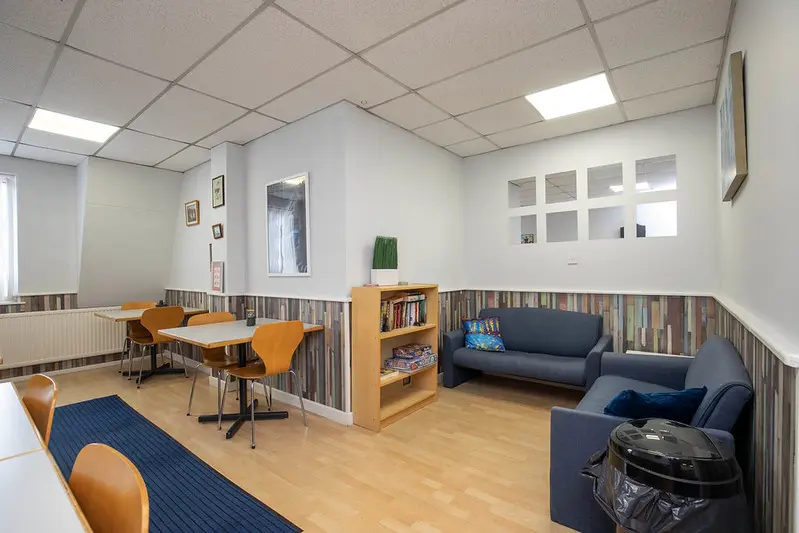
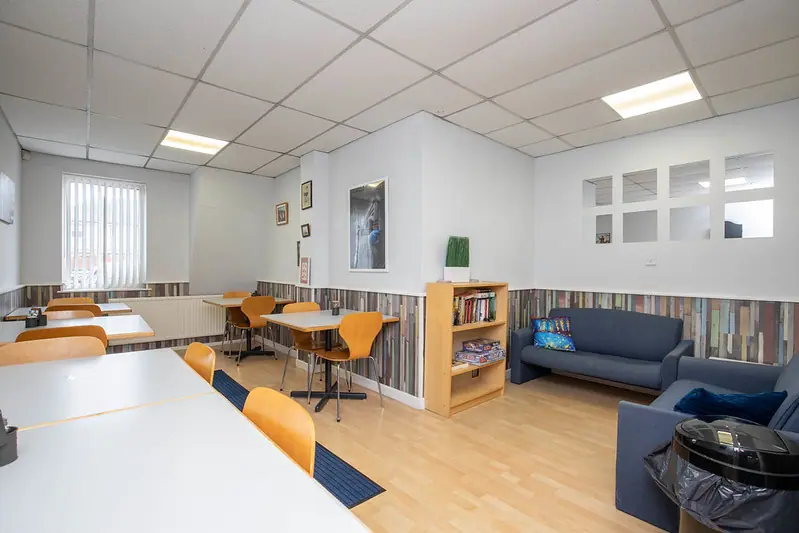
Training needs a rhythm: arrival, introductions, teaching blocks, short exercises, breaks, lunch and final questions. The room has to support that rhythm, and refreshments, toilets, nearby break areas and clear timings all shape the experience. A meeting room does not need the same movement for a short decision session; a 90-minute client meeting runs fine in a focused, private room, while a six-hour workshop needs breathing space. Picture how people will feel at 3pm, not just how the room looks at 9am.
“Assisting us with office moves on 3 occasions to accommodate the growth of our business.”Original CAD Solutions, tenant since 2012
The team that shifts a tenant into a bigger suite is the same team that sets your tables out on a training morning. That is usually what people mean when they say the building runs well.
Parking and arrival details affect attendance
Parking and arrival can decide whether a session starts calmly or with stress, and that matters more when 10 to 25 people arrive from different places. Attendees need to know where to park, which entrance to use, who to ask for and what time to arrive. Organisers need to get in early enough to check the room, test equipment and set up.
Free on-site parking eases the day for businesses bringing teams, clients or learners from Cardiff, Newport, Caerphilly, Barry, Bridgend and wider South Wales. Sitting in east Cardiff on Ffordd Pengam, with quick access from the A48 and M4 J29, we cut the risk of late arrivals and people walking in flustered after circling for a space. Treat visitor guidance for parking, reception and sign-in as part of the booking; the details are on our facilities page.
Twenty-five people, its own floor, and a car park nobody has to pay for
The boardroom sits on a private floor with lift access, so a training day or an interview panel never runs through anybody else’s working area. Organisers can get in ahead of the group to test the screen and set the tables out.
- Seats up to 25
- Private floor, lift access
- Projector and whiteboards
- Air conditioning
- Its own WC
- Free visitor parking
How to choose the right room for your session
Choose by session type, not only headcount. A 12-person workshop can need more space than a 16-person board meeting when the workshop involves activities and laptops.
Start with the purpose: learning, deciding, interviewing, presenting, practising or planning. Then check layout, equipment, arrival flow and break needs.
A training room is usually stronger when the session needs teaching or facilitation, laptops and workbooks, group exercises, half or full-day timing, regular breaks, clear sightlines to a screen and space for the trainer to move.
A meeting room is usually stronger when the session needs private discussion, a boardroom table, client or partner conversation, interviews, shorter agenda blocks, focused decision making and a calm, controlled setting.
The best room supports the outcome. A cheaper room that makes the day harder is not better value.
What to ask before booking
A good enquiry gives the provider enough to recommend the right room. “A room for 20 people” is not enough. For a sense of the whole process, see what to expect from meeting room hire in Cardiff. Before you confirm, ask:
- Is the session a meeting, workshop, training day or interview day?
- How many people will attend?
- Will attendees use laptops?
- What layout is best for the session?
- Will you need a screen, flipchart or whiteboard?
- Is Wi-Fi included, and are power points easy to reach?
- Are refreshments available or allowed?
- Is parking available for attendees?
- How does visitor arrival and sign-in work?
- Can the organiser arrive early to set up?
- What support is on hand if equipment needs checking?
These questions head off last-minute problems and show the provider how the space will be used.
Mistakes to avoid when booking for 10 to 25 people
The most common mistake is booking by maximum capacity alone. A room that seats 25 may be wrong for 25 people using laptops, workbooks and group tasks. The next is ignoring breaks: long sessions need space to reset, use facilities and return without losing energy, and a packed room makes the day feel heavier than it should.
Equipment assumptions cause trouble too. Confirm the screen, Wi-Fi and laptop connection before the session, not on the day. And do not leave arrival details to the last moment. Clear joining instructions sent ahead cut late arrivals and repeated calls.
Book the room that supports your session
The right room is rarely the one with the highest capacity. It is the space that supports the purpose of the day, keeps people comfortable and helps you run the session without avoidable problems.
Alexandra Gate Business Centre offers practical meeting and training room options in Cardiff for businesses, trainers, consultants and teams planning sessions for 10 to 25 people. The business centre setting, free parking, visitor flow and on-site support help you run a smoother day from arrival to close. We have been doing this from east Cardiff since 2005.
Give us the shape of the day and we will match the room
Share your headcount, session type, preferred layout, equipment needs, timings, parking requirements and break schedule, and we will match the space. Call 029 2089 4700 or book a viewing to see the rooms before you commit.
FAQs
Is a training room different from a meeting room?
Yes. A training room is designed for learning, participation and longer sessions. A meeting room is designed for discussions, decisions, interviews and client meetings.
What room is best for 10 to 25 people?
It depends on the session. A training room is usually better for workshops and full-day sessions, while a meeting room suits shorter discussions or boardroom-style meetings.
Can a meeting room be used for training?
Yes, for small or discussion-based training. A dedicated training room is better when people need laptops, workbooks, activities and more space.
What layout is best for a training session?
Classroom, cabaret or workshop layouts often work well. The best one depends on whether attendees need to face a screen, work in groups or take part in exercises.
What should I check before booking a training room?
Check capacity, layout, Wi-Fi, screen access, power points, flipcharts, refreshments, parking, visitor arrival details and whether you can arrive early to set up.
Why does parking matter for room hire?
Late arrivals disrupt meetings and training. Clear parking and arrival instructions, plus free on-site spaces, help attendees arrive on time and ready.
Four more things to weigh before you book
Tell us the session, not just the headcount
Workshop, board meeting, interview day or onboarding week. Give us the purpose, the timings and whether laptops are involved, and we will put you in the room that carries it.
- Rooms set out before the group arrives
- Free visitor parking, no permits
- Weekday reception to greet attendees
Purpose, headcount, laptops, timings. Four answers and we will name the room.
Explore meeting and training rooms
Arrange a viewing →