

Meeting room choice shapes more than the room itself. Venue type affects privacy, punctuality, parking, client impression, room layout, catering, cost control, and how easy the meeting feels once people arrive. Cardiff businesses usually get a better result when they choose the venue around what the session needs to do, not around what sounds more familiar or more impressive on paper.
- Business centre meeting rooms usually suit interviews, client meetings, training sessions, presentations, and repeat business use better than hotels.
- Hotel meeting rooms can work well for larger events, overnight guests, hosted sessions, or meetings tied to dining and accommodation.
- Business centres often feel more focused, quieter, and more practical for working meetings.
- Hotels can be useful when hospitality matters as much as the meeting itself, but they are not always the best choice for ordinary business sessions.
- Venue value should be judged by privacy, layout, access, support, and what is included, not by room hire price alone.
- Cardiff buyers should check parking, AV, WiFi, room setup, refreshments, booking flexibility, and arrival flow before deciding.
- The best room is the one that helps the meeting run properly with the least friction.
| Factor | Hotel meeting room | Business centre meeting room |
| Best for | Hospitality-led or larger events | Day-to-day business meetings |
| Atmosphere | Mixed-use and guest-led | Work-focused |
| Privacy | Can vary by hotel activity | Usually stronger for routine meetings |
| Repeat bookings | Can work, but often less purpose-built | Usually easier and more consistent |
| Interviews and client meetings | Sometimes suitable | Usually stronger |
| Training sessions | Good for larger or residential formats | Good for focused working sessions |
| Parking and access | Depends heavily on hotel traffic | Often simpler for weekday business use |
| Overall fit for ordinary business use | Sometimes good | Usually better |
Alexandra Gate Business Centre
Need a professional meeting room in Cardiff?
Hire a practical, professional space for client meetings, interviews, training sessions, workshops, and team discussions, with flexible workspace support available at Alexandra Gate Business Centre.
Rent a Meeting Room
Best for businesses that need a professional Cardiff room for client meetings, training, interviews, presentations, planning days, or private discussions without taking permanent office space.
Hire a Meeting RoomSchedule a Visit
Best if you want to see the centre, check access, view facilities, and speak with the team before booking.
Arrange a VisitView Serviced Offices
Best for teams comparing furnished office space in Cardiff with flexible terms, reception support, parking, and broadband.
View Office OptionsUse Our Virtual Office Address
Best for remote workers and small businesses that want a professional Cardiff business address without renting a physical office.
View Virtual Office SupportRead Our Google Reviews
Best if you want to hear from people who have used Alexandra Gate before choosing a meeting room or workspace.
Read Google ReviewsWhich type of meeting room is usually the better choice in Cardiff?
Business centre meeting rooms are usually the better choice in Cardiff for most ordinary business meetings because they are built around work rather than hospitality. Venue purpose changes the whole experience of the day. A room designed for interviews, presentations, client meetings, training, and internal reviews usually supports those activities better than a room sitting inside a much broader hotel operation.
Meeting focus is the biggest reason. Business-centre rooms usually feel like places where work is expected to happen. Attendees arrive with the right mindset more quickly because the setting already feels connected to offices, business activity, and professional use.
Hotel meeting rooms still have a place. Accommodation needs, all-day catering, larger delegate numbers, and mixed events can make a hotel the better fit in the right situation. That tends to happen when the meeting is part of something wider than the meeting itself.
Buyer habit often clouds the decision. Businesses choose hotels because hotels are familiar and easy to picture. They choose business centres later, once they have had one or two frustrating experiences with hotel traffic, hotel layout, or paying for hospitality features they did not really need.
Practical fit is what should decide the venue. Client review, interview day, training session, project workshop, and repeat monthly meeting usually point strongly towards a business centre. Large conference-style event, overnight guest booking, and dinner-linked programme may still point towards a hotel.
What is the real difference between a hotel meeting room and a business centre meeting room?
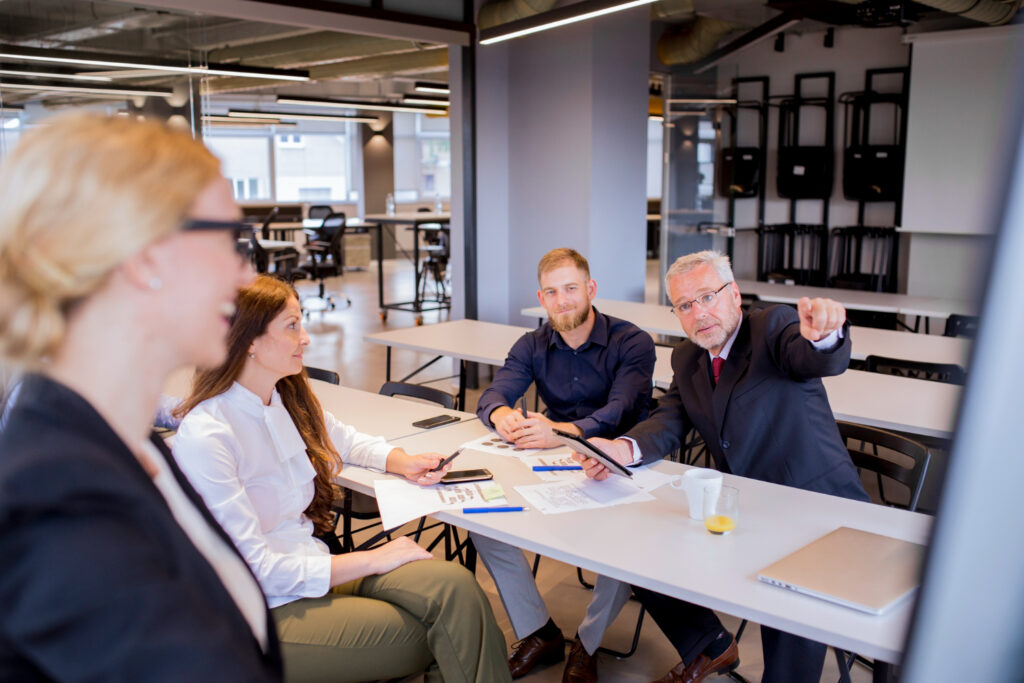
Hotel meeting rooms sit inside a hospitality environment, while business centre meeting rooms sit inside a working business environment. Venue purpose changes how the building feels, how staff support the booking, and what kind of day the space naturally supports. That is the real difference.
Hospitality is the hotel’s starting point. Guests may be staying overnight, having lunch, attending a wedding, using a bar, checking in, or moving through the same shared areas as the meeting attendees. That mixed-use model can be useful, but it does affect the flow and feel of the day.
Business use is the starting point in a business centre. Offices, meeting rooms, reception areas, and workday traffic tend to shape the venue experience. That often creates a cleaner fit for commercial meetings because the room is part of a building built around weekday business activity.
Atmosphere changes because of that wider setting. Hotel rooms can feel polished, formal, or impressive, but they can also feel a little detached from the practical purpose of the session. Business-centre rooms often feel more direct and more grounded, which is usually what everyday business meetings need.
Expectation changes as well. A person walking into a hotel may assume several different things are happening in the building. A person walking into a business centre usually assumes one thing first: work is happening here. That shift is subtle, but it matters.
When does a hotel meeting room make sense?
Hotel meeting rooms make sense when the booking needs hospitality support as much as meeting space. Event shape usually decides this. A session that includes overnight guests, a full-day hosted schedule, dining, or a larger mixed group can fit naturally inside a hotel environment.
Accommodation is one of the clearest reasons. Delegates, trainers, or visiting clients may need bedrooms as well as a meeting room, and keeping both in one venue can make the day or the whole programme easier to manage.
Event scale is another reason. Larger meetings, dinner-linked sessions, networking events, and programmes with several moving parts often sit more comfortably in a venue already used to handling hospitality logistics. Hotel staff are often used to coordinating rooms, food, guest movement, and timing in a more event-led way.
Food expectations can also point towards a hotel. Breakfast meetings, lunch-led sessions, and bookings where the hospitality experience matters almost as much as the room itself may feel easier to run there. That does not mean the hotel is automatically better. It means the hotel may be better suited to that style of day.
Travel pattern can settle the decision too. A group coming in from outside Cardiff, staying overnight, and returning the next day is solving more than one problem at once. In that case, a hotel may be the more sensible choice.
When does a business centre meeting room make more sense?
Business centre meeting rooms make more sense when the booking is mainly about focused work. Meeting purpose feels sharper in a venue built around business use rather than hospitality. That usually makes business-centre rooms the stronger choice for everyday commercial bookings in Cardiff.
Client meetings are a good example. Presentation, privacy, screen use, WiFi reliability, and a calm arrival experience often matter far more than dining or accommodation. A business-centre room usually supports those priorities more naturally.
Interviews and recruitment sessions fit well too. Waiting arrangements, quiet conversation, and a professional working setting often help the whole process feel organised. That kind of atmosphere is usually easier to create in a business centre than in a busier mixed-use venue.
Training sessions are another strong fit. Flexible layout, AV equipment, WiFi, breakout practicality, and a room designed for working discussion often matter more than broader hospitality extras. A business-centre room usually supports that better for most standard training days.
Repeat bookings often point the same way. A business holding monthly reviews, project meetings, board sessions, or regular client work usually benefits from a venue that feels straightforward and built for that exact kind of repeat use.
Which one usually feels more professional to clients?
Business centre meeting rooms usually feel more professional to clients when the purpose of the meeting is straightforward business. Client impression is shaped before the meeting even starts. A venue that feels aligned with the work usually creates the best first impression.
Work-focused atmosphere is one reason. Reception areas, office users, meeting-room corridors, and a weekday business environment all help the session feel serious and intentional. That can be reassuring for clients who want the meeting to feel efficient rather than overly staged.
Hotel atmosphere communicates something slightly different. Comfort, hospitality, and event presentation often come through more strongly than ordinary day-to-day business energy. That can work very well for some meetings, especially hosted ones, but it is not always the best fit for commercial discussion.
Relevance matters more than prestige. A contract review, a hiring meeting, a proposal presentation, or a project session often feels more natural in a business-centre room because the setting matches the work. A relationship dinner or executive stay may feel more natural in a hotel.
Consistency matters too. Business-centre rooms often sit inside a wider environment of offices, meeting facilities, and normal business use. That broader context can make the room feel more grounded and less like a one-off booking.
Which one usually offers better privacy?
Business centre meeting rooms usually offer better privacy for routine commercial meetings because the wider building is less likely to be full of social traffic, leisure guests, or unrelated public activity. Privacy matters because many meetings involve sensitive discussion long before they are formally labelled confidential.
Hotel environments can be busy in unpredictable ways. Check-ins, restaurant traffic, weekend events, bar activity, and unrelated functions all change how private the meeting feels from arrival to departure. That does not always create a problem, but it can.
Business-centre environments often feel more contained. Visitor traffic tends to be more directly linked to work, which usually creates a quieter and less socially mixed atmosphere. That can make a big difference for HR meetings, financial discussions, legal conversations, and client matters.
Arrival privacy matters too. Walking through a lively hotel lobby or shared lounge can feel more exposed than walking through a business-centre reception. That small detail matters more when the attendees are interview candidates, clients, or people discussing something sensitive.
Room control is easier in many business centres as well. Smaller, more focused venues often make it simpler to keep the meeting close to the room, the reception point, and the practical support the organiser actually needs.
Learn what is included in our meeting room facility.
Which one works better for interviews?
Business centre meeting rooms usually work better for interviews because they create a more controlled and more credible working environment. Interview flow matters. Candidate experience matters. Quiet waiting arrangements matter. Those needs usually point towards a business-centre setting.
Candidate confidence often improves in a room that feels clearly tied to business activity. A clean reception, straightforward check-in, and a quiet commercial setting usually help the interview process feel organised and fair. That reflects well on the employer.
Panel control is another reason. Interviewers often need a room where conversation stays private and movement around the space does not distract from the discussion. Business-centre rooms are often better at delivering that kind of contained atmosphere.
Hotel rooms can still work for interviews, especially if the hotel is quiet and the room quality is good. The issue is not that hotels fail interviews by default. The issue is that their wider environment is often less closely aligned with what an interview day needs.
Practical confidence is the real goal. A venue that feels calm from arrival to departure usually gives candidates a better experience and gives the organiser fewer things to worry about.
Which one works better for confidential meetings?
Business centre meeting rooms usually work better for confidential meetings because the setting is generally quieter and more aligned with work-led conversations. Confidentiality is not only about whether the door closes properly. Confidentiality is also about whether the wider environment supports discretion.
Sensitive business discussions often need calm, not atmosphere. Financial reviews, legal meetings, partnership talks, grievance conversations, and internal leadership sessions all benefit from a venue where other activity is less likely to break the tone of the discussion.
Business-centre traffic is usually easier to read. Reception movement, corridor movement, and the general building purpose tend to feel more predictable. That helps the organiser feel more comfortable about who is nearby and how exposed the meeting feels.
Hotel settings can be fine when the room is well isolated and the wider venue is quiet enough. The difficulty is that many hotels are balancing several different activities at once, which can make privacy feel weaker even if nothing explicitly goes wrong.
Discretion is usually easier to achieve when the venue itself feels built around business rather than guest leisure or mixed event use. That is why confidential meetings so often fit business centres better.
Which one is better for training sessions in Cardiff?
Business centre meeting rooms are often better for training sessions in Cardiff when the session is practical, business-led, and focused on learning rather than hospitality. Training quality depends on layout, AV, WiFi, and room focus. That usually makes business-centre venues the stronger fit for most working training days.
Layout flexibility is one reason. Classroom, boardroom, cabaret, and presentation-style arrangements matter more in training than they do in many short meetings. A room that can adapt cleanly to the trainer’s format usually gives a better learning experience.
Working atmosphere is another reason. A business-centre room often feels closer to the environment people return to after the training finishes. That can make the content feel more relevant and easier to apply, especially for management training, systems training, and internal development sessions.
Hotel rooms can work very well for larger delegate numbers, all-day programmes, or multi-day training linked to overnight stays. Residential training and conference-style sessions often fit naturally into hotels because the hospitality support is part of the event.
Buyer fit should still decide the venue. Cardiff businesses running regular, medium-sized, or practical training sessions usually need efficiency and reliability more than hospitality scale. That is where business centres often win.
Which one is better for client presentations?
Business centre meeting rooms are usually better for client presentations because they create a setting that feels built for focused business conversation. Presentation quality depends on room layout, screen use, privacy, punctuality, and the confidence of the presenter. That usually points towards a business-centre room.
Client attention is easier to hold in a work-led environment. A room that feels calm, straightforward, and clearly designed for commercial discussion helps keep the focus on the proposal, the slides, and the conversation.
Technical confidence also matters. Reliable WiFi, screen or projector setup, and a room that makes it easy to sit facing the presentation all affect how smoothly the session runs. Those details often matter more than the venue looking slightly more polished in a hospitality sense.
Hotel rooms can be useful when the presentation sits inside a wider hosted day, perhaps involving lunch, guests from outside Cardiff, or an executive programme. That is a real use case. It is simply not the most common one for ordinary business presentations.
Credibility usually grows from relevance. A presentation in a business-centre meeting room often feels more natural because the venue looks like the place where business decisions are expected to happen.
Which one is easier for repeat monthly meetings?
Business centre meeting rooms are usually easier for repeat monthly meetings because the booking model and the room environment are often more stable and more work-focused. Repeat use highlights the small details. A room that feels fine once can become irritating when booked twelve times a year.
Consistency is one of the biggest advantages. Same check-in process, same room type, same practical support, and the same weekday business rhythm all help recurring meetings start smoothly. That matters for board meetings, project sessions, budget reviews, and client retainers.
Business-centre venues often suit these repeat patterns naturally because repeated business use is part of the offer rather than a side activity. That gives the venue team a stronger feel for what regular commercial bookers actually need.
Hotel venues can take repeat bookings too, but they are often balancing conferences, private functions, restaurant demand, and overnight guest traffic at the same time. That wider event mix can affect room availability, consistency, and the feel of the visit.
Reliability is what frequent users usually care about most. A business-centre room often gives them more of that and asks for less tolerance of unrelated venue noise.
Which one is better for all-day meetings?
All-day meetings can work well in either venue type, but the better choice depends on what the day is trying to achieve. Full-day format changes the booking because comfort, refreshments, pacing, and room energy all become more important across several hours. That usually makes the answer conditional rather than absolute.
Hotel venues can be strong when the day includes formal lunch expectations, visiting guests, or a more hosted feel. That broader hospitality support can make the day easier when food service and guest care are central to the booking.
Business-centre venues are often stronger when the day is still mainly a working session. Strategy meetings, planning sessions, training workshops, and internal decision-making days usually benefit from a room that feels work-led throughout the day rather than event-led.
Break quality matters in both cases. Refreshments, nearby facilities, and whether people can step out without losing momentum all affect productivity. Hotels may offer more obvious hospitality choice. Business centres may offer a cleaner sense of business continuity.
Delegate type should guide the decision. Internal teams and practical work sessions often lean towards business centres. Hosted groups with travel needs or a fuller social schedule may lean towards hotels.
Which one is better for smaller meetings?
Business centre meeting rooms are usually better for smaller meetings because smaller groups often need focus, simplicity, and a professional working environment more than a wider hospitality offer. Small-group efficiency matters because the wrong venue can feel oversized, noisy, or unnecessarily formal very quickly.
Client reviews are a good example. A quiet room, straightforward arrival, and strong WiFi often matter more than the venue having bedrooms, a restaurant, or event space elsewhere in the building.
Internal discussions usually follow the same pattern. Teams often want a room that lets them sit down, connect a screen, get through the agenda, and leave without a complicated venue experience around them. Business-centre rooms are often built for exactly that kind of use.
Hotel rooms can still handle small meetings well. The issue is not suitability in the absolute sense. The issue is that smaller business meetings usually do not need most of what the hotel model is there to provide.
Simplicity tends to win at small scale. A venue that lets the business walk in, get started quickly, and stay focused is usually the stronger choice.
Which one works better for larger meetings or more event-led sessions?
Hotel meeting rooms often work better for larger meetings or more event-led sessions because scale and hospitality support become more important as the booking gets more complex. Event complexity changes the job from room hire into venue coordination. That is where hotels often show their strengths.
Delegate numbers are the first clue. Larger groups create more pressure around refreshments, movement, setup, breakout planning, and general event handling. Hotels are usually built to absorb more of that operational load.
Event shape is the second clue. Conferences, networking sessions, dinners, award-linked meetings, and programmes involving accommodation often fit better inside a venue already used to running several services under one roof.
Business-centre rooms can still work for larger groups in some cases, especially training-led or boardroom-style sessions. The difference is usually that business centres perform most consistently when the session is still mainly about focused business use rather than hospitality-heavy event structure.
Agenda shape should decide the venue. A business should not choose a hotel simply because the meeting is larger than usual. A hotel becomes the stronger option when the meeting is also becoming more event-like.
Which one usually gives better value?
Business centre meeting rooms usually give better value for everyday business sessions because more of the spend tends to go into the room, the working setup, and the practical support the meeting actually needs. Value is not the same thing as the cheapest headline price. Value is what the business gets back in usefulness and reduced friction.
Hotel pricing can make sense when the booking also needs bedrooms, dining, or hosted-event support. Those extras add cost, but they may be justified in the right type of event. The problem comes when a business pays for a hospitality setting it does not really need.
Business-centre pricing often feels cleaner because the offer is more closely tied to the meeting itself. WiFi, presentation equipment, practical layout, and a work-focused environment usually make up the core of the value. That often suits commercial users better.
Use pattern changes the comparison. A one-off client event with meal service may justify the hotel model. A monthly team review, a half-day training session, or a hiring panel often does not.
Practical value is what buyers should measure. A room that saves setup time, supports the agenda properly, and avoids avoidable distraction often turns out to be the strongest-value booking even if it is not the cheapest on paper.
Which one is better for parking and access?
Parking and access depend on the specific venue, but business centres often have an advantage when the meeting is built around weekday business travel rather than hospitality use. Arrival convenience matters because the first friction of the day is often the car park or the entrance, not the room itself.
Hotel parking can be good, especially in larger or edge-of-centre venues. Guest demand, restaurant use, and event traffic can still affect how straightforward that parking feels at busy times. That is why hotel parking should always be checked rather than assumed.
Business-centre access often feels simpler for ordinary workday use. Attendees usually want to park, walk in, check in quickly, and start the meeting without crossing busy leisure or event areas. That straightforward flow is one of the quieter strengths of a business-centre venue.
Arrival pattern affects the meeting mood too. Guests who can find the room easily and settle quickly tend to start in a more focused frame of mind. A venue that feels complicated before the meeting has even begun is already creating drag.
Local travel style should guide the decision. Teams driving in from around Cardiff and South Wales often value easy weekday access more than wider hospitality extras.
How should Cardiff businesses compare hotel and business-centre meeting rooms fairly?
Cardiff businesses should compare hotel and business-centre meeting rooms by putting both through the same practical checklist. Fair comparison only works when the same questions are asked of each venue. A well-known venue name or a polished brochure should not win by default.
Purpose fit should come first. Ask what the meeting is for, how many people are attending, whether privacy matters, whether AV matters, whether food service really matters, and whether the room needs to feel more like a workroom or more like a hosted venue.
Access should come next. Check parking, travel ease, arrival route, reception flow, and how easy it is for guests to find the room without friction. These details affect punctuality and first impression before the meeting begins.
Support should be checked carefully. Confirm WiFi, screen or projector use, room layout, refreshments, reception handling, and what help is available if something needs changing on the day. Small details shape room quality much more than buyers first expect.
Value should be judged after those checks, not before them. A room is good value when it supports the meeting properly with minimal friction. That may be a hotel in some cases. It is often a business-centre room in many more ordinary commercial situations.
What should you ask before booking either venue type?
Businesses should ask direct practical questions before booking any meeting room because venue listings rarely answer everything that affects the actual day. Booking confidence comes from detail, not assumptions. The right questions usually reveal the better venue very quickly.
Ask what is included in the room hire. Confirm WiFi, screen or projector, cables, refreshments, seating layout, whiteboards, flipcharts, and any on-site support. That simple check prevents many day-of-meeting frustrations.
Ask about parking and arrival. Confirm where guests enter, how they are received, whether parking is free or limited, and whether there are any timing restrictions or access issues. These details affect organiser stress more than the room brochure does.
Ask about privacy and noise. Confirm what sits near the room, whether other events are running nearby, and how suitable the venue is for interviews, confidential discussions, or concentrated working sessions. That answer matters more than glossy photos.
Ask about flexibility. Confirm cancellation terms, room-change options, catering arrangements, and what happens if delegate numbers shift. A venue that can adapt smoothly is often worth more than one with the lowest advertised rate.
When does Alexandra Gate make more sense than a hotel?
Alexandra Gate usually makes more sense than a hotel when the booking is mainly about focused business use rather than wider hospitality needs. Business-centre environment creates a more direct and more practical setting for meetings, presentations, interviews, and training sessions. That is often the better fit for Cardiff businesses booking rooms for real working sessions.
Meeting support is one reason the fit is strong. Flexible layouts, WiFi, presentation equipment, and practical business-room setup are exactly the features many companies need without the extra weight of a hotel venue. That makes the room easier to use and easier to justify.
Business setting is another reason. Offices, meeting rooms, reception support, and a work-led atmosphere all sit inside the wider Alexandra Gate environment, which creates a more natural backdrop for commercial sessions than a mixed-use hospitality venue.
Access convenience can also tilt the decision. Straightforward arrival and practical parking are often more valuable to weekday attendees than the wider hospitality extras a hotel may offer. That difference becomes obvious once the organiser starts thinking about the day in detail.
Repeat usability often seals the choice. Businesses that need regular meeting rooms in Cardiff usually benefit from a venue model built around professional sessions rather than event turnover. That is where a business centre often becomes the more sensible long-term option.
What usually makes the better meeting room choice?
The better meeting room choice is usually the venue that fits the job the meeting needs to do. Purpose fit matters more than venue type on its own. A hotel can be exactly right when the booking includes hospitality, overnight guests, or a broader event format. A business centre is often exactly right when the booking is about focused work, clear presentation, privacy, and practical ease.
Cardiff businesses usually get the strongest result when they stop asking which venue sounds more impressive and start asking which one removes the most friction from the day. That shift in thinking often leads to a better booking.
Professional meetings, interviews, training sessions, recurring team sessions, and smaller client discussions often feel more natural in business-centre rooms because the environment is built around work. Larger events, residential sessions, and hospitality-linked programmes may still point towards hotels.
Alexandra Gate Business Centre fits the first group especially well because the value sits in practical business use, not in generic venue appeal. When the goal is to hold a meeting that runs smoothly, feels professional, and stays focused on the work in the room, that kind of setting usually makes the strongest sense.
