
A quiet office matters because noise directly affects concentration, call quality and how professional a business sounds to clients. Small teams feel it fastest, since one loud conversation, a busy corridor or thin walls can disrupt everyone in the room. When you compare Cardiff office space, noise deserves the same attention as size and price, because a room that feels fine on a ten-minute viewing can be difficult to work in every day.
If focused work and clean calls matter to your team, come and listen to the building rather than trusting a listing. Call 029 2089 4700 or look at our serviced offices in Cardiff.
Background noise on a client call makes a business sound less organised than it is, before a word of the pitch lands.
Every interruption costs recovery time, not just the seconds it lasted, so an hour of detailed work needs an hour of quiet.
Small teams share one room, so one loud conversation is not a personal problem. It is everybody’s problem.
Why noise affects small businesses more
Small teams usually work in one shared room, so noise spreads instantly. A five-person team does not have spare desks, breakout zones or separate call areas, and interruption tends to hit everyone at once.
Concentration takes the first hit. Detailed work, writing, planning, quoting and financial admin all need uninterrupted stretches. Frequent noise breaks that focus, and the recovery time costs more than the interruption itself.
Calls suffer next. Sales calls, client updates, supplier discussions and interviews all sound better in a controlled space. Background noise makes a business sound less organised than it is, whether that is fair or not.
Then there is comfort. Working through constant background noise is tiring, and by mid-afternoon it shows in energy, patience and output. When you compare offices, judge the working environment as well as the room.
What causes noise in shared office buildings
Most noise comes from normal building activity rather than anything dramatic. Understanding the sources helps you judge a space during a viewing.
- 6Sources worth checking
- 4You can test on the tour
- 2You have to ask about
Scroll the table → hover any row to focus it
| Noise source | What to check | Why it matters |
|---|---|---|
| Corridor trafficTest it yourself | Office position relative to main routes | Constant movement disrupts focus |
| Neighbouring officesAsk about it | Type of businesses nearby | Call-heavy neighbours create more sound |
| Shared kitchensTest it yourself | Distance from your office | Busy at peak times |
| Meeting roomsAsk about it | How often they are used | Groups arriving and leaving cause movement |
| Reception areasTest it yourself | Visitor volume | Front-of-house activity carries |
| External noiseTest it yourself | Roads, deliveries, car park activity | Affects offices near entrances |
Most of this is normal in a working building. What matters is whether the level suits how your team works.
Judging noise during an office viewing
Do not rely on how the room sounds in a quiet moment. A viewing is a short snapshot, so test it properly.
Listen with the door open and closed. That tells you how much corridor and neighbouring sound reaches the room and how much control the door gives you. Ask when the building is busiest, then ask whether you can return at that time. Mid-morning and early afternoon usually reveal more than a quiet slot. Notice where the room sits: close to a kitchen, reception, meeting room or main corridor means more movement.
Picture a normal day rather than the viewing itself. If your team runs client calls, focused work or private discussions, ask directly how the space performs during those.
Ask for the tour at eleven, not at four
Come when the building is at its busiest and stand in the room with the door open for a minute. You will learn more in that minute than from any description of sound insulation.
Why a private office beats a shared desk for focus
A private office gives more control over sound, interruptions and call privacy. Shared desks suit flexible working, but they rarely support consistent focus.
You control who is in the room. A team of two, three or six manages its own noise, agrees its own habits and works without unrelated conversations cutting across the day. Calls are the clearest difference. Client calls, quotes, HR conversations and interviews benefit from a room with a door. A private office also settles a routine. People know where they work, how the space sounds and when the quiet periods are, which supports better output than an environment that changes daily.
For teams choosing between a shared desk and a private room, focus and call quality are usually the deciding factors. Our guide on a small office versus a coworking desk works through the trade-off if you are weighing both.
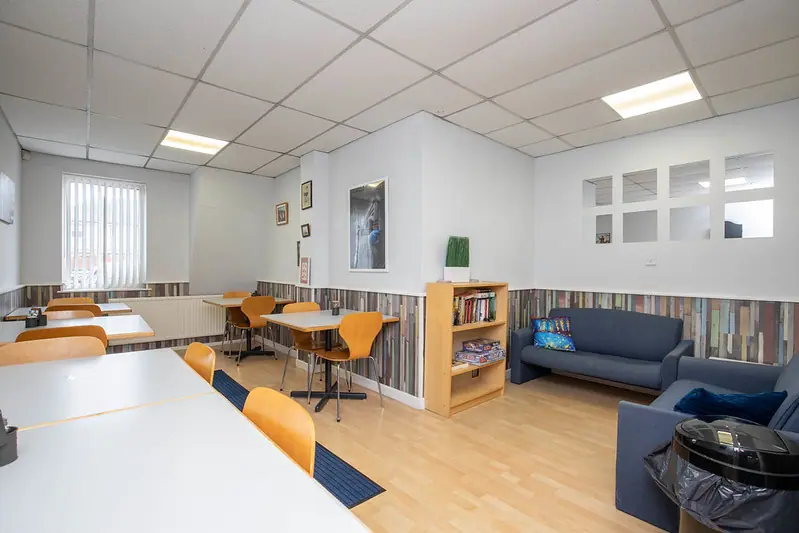 A door of your own
You cannot agree quiet hours with strangers
In a shared space the noise level is set by whoever turns up. In your own room it is set by your team, which is the whole difference for work that needs concentration or calls that need privacy.
- Lockable suites for 2 to 30 people
- Intruder alarms fitted where required
- 24/7 fob access for early or late focus time
- Meeting rooms for the calls that need a room
How office position changes the noise level
Two identical rooms in the same building can feel completely different depending on where they sit.
Offices near entrances, kitchens, reception areas, lifts, stairwells or meeting rooms pick up more movement, especially at peak times. Rooms further from shared facilities usually feel calmer. Floor level matters too: upper floors often see less general traffic than ground-floor rooms near the main entrance, though it depends on the layout. Ask what sits either side of the office and above or below it, then decide whether that suits how you work.
Call quality and client perception
Poor call conditions affect how customers judge a business. Background noise, echo or interruptions all shape the impression, even when the conversation itself goes well.
Sales calls, client updates, supplier negotiations and interviews all sound more professional from a controlled space. A quiet room helps you listen properly, respond clearly and take accurate notes, which reduces mistakes and repeated conversations. Video calls need the same treatment, since microphones pick up more than people expect. If your team runs a lot of client conversations, a private office plus meeting room access when needed is usually the practical setup.
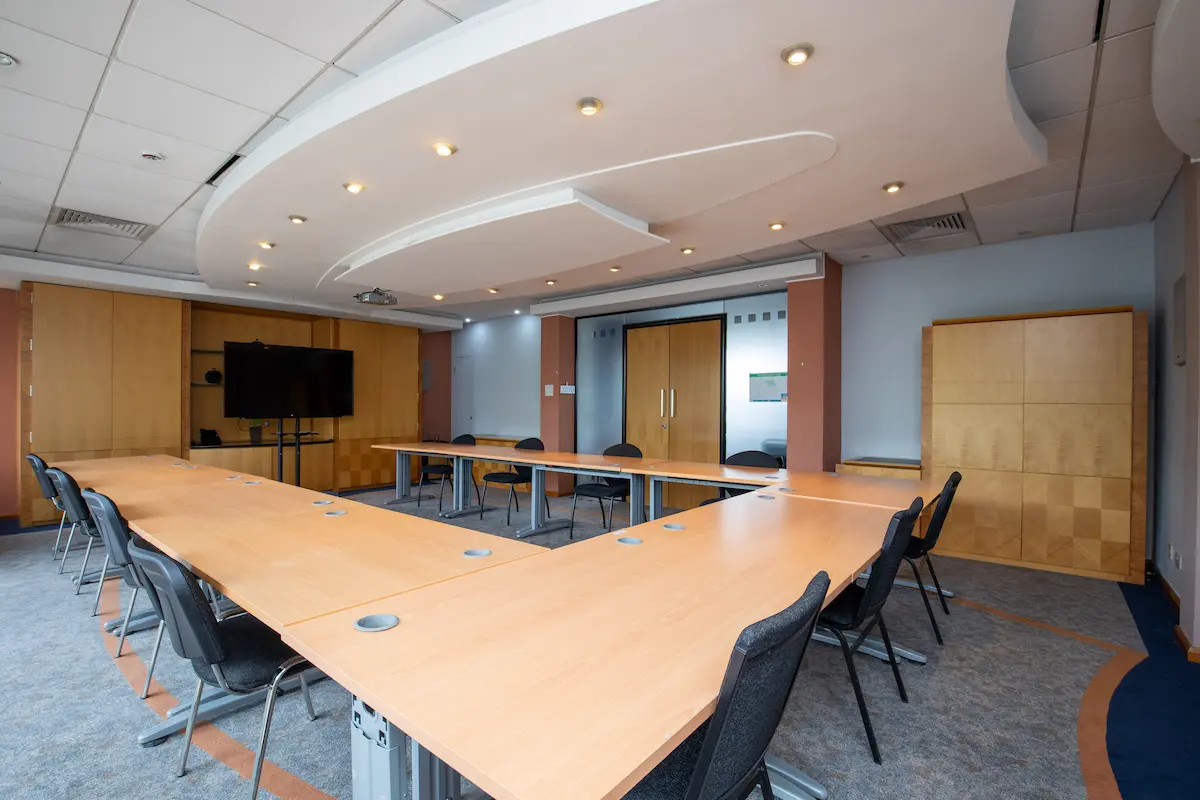 Book by the hour
Take the difficult conversation out of the room
An HR discussion, a tense client call or an interview does not belong within earshot of the rest of the team. A bookable room downstairs solves it without renting one all year.
- Meeting room, seats up to 8
- Training room, seats up to 12
- Boardroom on its own floor, seats up to 25
Managing noise inside your own office
Some noise comes from within the team, and small habits make a real difference.
Agree call habits, so people know when to use headsets, step out or book a meeting room for longer conversations. Set quiet periods for deep work, even a short daily block, and use meeting rooms for anything longer or more sensitive rather than holding it at desks. Layout helps too: desk position, screens, storage and soft furnishings all affect how sound travels in a small room. None of this needs to be formal. Clear expectations usually beat rules.
How the building affects the working environment
Building management shapes the environment as much as the room. A well-run centre handles shared areas, cleaning, maintenance and general behaviour, which keeps distraction lower.
Shared facilities matter: kitchens, toilets, corridors and reception all create movement, and how they are managed affects how disruptive that movement feels. Maintenance counts too, because noisy doors, faulty heating or poorly managed access create avoidable interruptions. Good centres deal with those quickly. Ask how the building handles noise complaints or disruption, since the answer says a lot about how the space is run day to day. Our facilities and amenities page sets out how the shared areas work here.
“Professional, friendly and helpful building management team.”Google review, Alexandra Gate Business Centre
Noise is a management question more than an architectural one. Whoever handles a stuck door, a busy corridor or a neighbour’s habits is the reason a building stays workable, and the people based here deal with that team every week.
Match the space to how loud your week is
Swipe to compare → tap any card
Choosing an office that supports focused work
Match the office to how the team actually works, not just to headcount or price.
Think about how much of the day involves calls, concentration, collaboration or client contact. A team on the phone all day has different needs from one doing detailed technical work. Consider the layout and whether the room supports desks, movement, storage and calls without feeling cramped, because a tight room amplifies noise and reduces comfort. Check meeting room availability as part of the decision, since it takes pressure off the main office. And think ahead: a room that works for three may not work for six, so ask what happens when the team grows. Our guide to choosing the right office size covers that step.
A simple checklist for judging noise
Take this with you on any Cardiff office viewing.
- Is the office near a main corridor, kitchen or reception?
- How loud is the room with the door open?
- How loud is it with the door closed?
- What businesses are next door?
- How often are nearby meeting rooms used?
- When is the building busiest?
- Can you view the office at a busy time?
- Is there external noise from roads or deliveries?
- Are there quiet areas or meeting rooms for calls?
- How does the building manage shared spaces?
Clear answers protect you from choosing a room that works on viewing day and frustrates the team by week three. Our viewing checklist for a Cardiff serviced office covers the rest of the building.
Find an office that supports the work you do
A quiet, well-managed office helps small teams concentrate, run better calls and present themselves professionally. Noise is not a minor detail. It shapes daily working conditions, client perception and how comfortable the space feels over months.
Alexandra Gate Business Centre, in Pengam Green in east Cardiff, provides private serviced offices for small businesses, along with meeting rooms, free on-site parking and managed shared facilities. When you compare offices, check the room position, the neighbouring businesses, the shared areas and how the building is run.
Come and listen before you sign anything
To see how the workspace feels in practice, call Alexandra Gate on 029 2089 4700 or book a viewing to check the office, the surroundings and the working environment for yourself.
Tell us how much of your day is calls and we will show you the rooms that suit it.
Explore serviced offices in Cardiff →FAQs
Why does office noise matter for small businesses?
It affects concentration, call quality, comfort and how professional the business sounds to clients. Small teams share one space, so noise spreads quickly.
How can I check noise levels during a viewing?
Listen with the door open and closed, ask when the building is busiest, check the office position relative to shared areas, and ask whether you can view at a busier time.
Are private offices quieter than shared desks?
Usually yes. A private office gives you more control over interruptions, call privacy and daily working conditions.
What causes most noise in shared office buildings?
Corridor movement, neighbouring businesses, shared kitchens, meeting rooms, reception areas and external activity such as roads or deliveries.
Can meeting rooms help with call quality?
Yes. Booking a meeting room for longer or more sensitive calls keeps the main office quieter and gives you a controlled setting.
What should I ask about neighbouring businesses?
Ask what type of businesses are nearby, whether they are call-heavy, and how often nearby meeting rooms are used.
Four more things a viewing should settle
