
A commercial landlord gives you four walls, a lease and a bill. A business centre gives you a working office from the day you collect the keys: furniture, broadband, cleaning, reception, security, waste, heating and lighting, plus somebody on site who fixes things, all folded into one monthly figure. That is the whole difference, and it decides how much of your week you spend running a business rather than running a building.
At Alexandra Gate on Ffordd Pengam, Pengam Green, every item on that list is already switched on across our serviced offices in Cardiff. You can see exactly what is included with our Cardiff office facilities and amenities before you commit to anything. Want a straight answer on what your team would pay? Call us on 029 2089 4700 and we will give you real numbers for real suites.
Rates, service charge, insurance, utilities, broadband, furniture, cleaning, waste, security, repairs and an exit bill, each one a separate contract with a separate supplier.
One monthly figure, one team on site, and a phone that gets answered when the heating fails on a Tuesday morning.
17 land on you under a typical lease, 17 are already handled in a serviced licence, and 1 is the same either way: the monthly figure itself.
Bring the lease you are comparing against
Tell us the headline rent on the unit you are looking at and how many people you need to seat. We will set our monthly figure against it and show you which of the eighteen items below you would still be paying for separately.
The headline rent and your headcount. That is all we need to do the comparison properly.
What does a commercial landlord actually give you?
A landlord gives you the space and the right to occupy it. Almost everything else that makes the space usable becomes your job.
Sign a conventional lease on a unit off Newport Road or in Ocean Park, and here is what lands on your desk in week one:
- Business rates: your liability, your registration, your relief application
- Service charge: often estimated, then reconciled at year end with a balancing charge you did not budget for
- Buildings insurance: recharged to you, and you still need your own contents and public liability cover
- Utilities: gas, electricity and water contracts to source, sign and pay
- Broadband: you order it, and an install on a commercial line commonly runs four to twelve weeks
- Furniture: desks, chairs, storage, delivery, assembly
- Cleaning: a contractor to find, vet and manage
- Waste and recycling: a separate commercial contract, and a legal duty
- Security: access control, CCTV, an alarm, a monitoring contract
- Reception and post: nobody signs for your deliveries unless you employ someone to
- Repairs: depending on the lease, the boiler, the roof and the drains may be yours
- Dilapidations: a bill at the end for putting the place back as you found it
- A solicitor: to read the lease before you sign it
None of that is unreasonable. It is simply the deal. The landlord’s business is property, not your operations, and a lease is written so the risk of the building sits with the tenant. What catches people out is never the rent. It is the twelve other things attached to it.
Who handles what: business centre vs commercial landlord
The clearest way to see the gap is line by line.
Scroll the table → hover any row to focus it
| Responsibility | Business centre (Alexandra Gate) | Commercial landlord (typical lease) |
|---|---|---|
| Rent / licence feeSame either way | One monthly figure, + VAT | Rent, plus every charge below |
| Business ratesYours on a lease | Typically bundled into a serviced licence; confirm the specifics with us | Tenant registers and pays; tenant applies for any relief |
| Service chargeYours on a lease | Included in the monthly figure | Estimated, then reconciled; balancing charges possible |
| Buildings insuranceYours on a lease | Arranged for you | Insured by landlord, recharged to tenant |
| UtilitiesYours on a lease | Included | Tenant sources and contracts each supply |
| BroadbandYours on a lease | Fibre live on day one, shared access up to dedicated 500 Mbps | Tenant orders; commonly four to twelve weeks to install |
| FurnitureYours on a lease | Desks, chairs and storage already in the suite | Tenant procures, takes delivery, assembles |
| CleaningYours on a lease | Daily, offices and communal areas | Tenant appoints and manages a contractor |
| Waste and recyclingYours on a lease | Handled on site | Tenant holds a commercial waste contract |
| SecurityYours on a lease | 24/7 fob access, CCTV, optional intruder alarm fitted per office | Tenant installs and monitors |
| ReceptionYours on a lease | Manned Mon to Fri, roughly 8:30am to 4:45pm | None |
| Post and deliveriesYours on a lease | Mail sorted daily, outgoing post franked, parcels received | Tenant must be in to sign |
| Meeting spaceYours on a lease | Boardroom, meeting rooms and training room on site, bookable by the day | Tenant builds one, or hires off site |
| ParkingYours on a lease | Free on site for staff and visitors; EV charging | Often separate, often charged |
| RepairsYours on a lease | Our problem | Frequently the tenant’s, under a full repairing lease |
| Legal cost to enterYours on a lease | Licence, usually no solicitor needed | Lease, solicitors on both sides |
| ExitYours on a lease | Notice period | Assignment, subletting or a break clause, plus dilapidations |
| Point of contactYours on a lease | One team, on site | Landlord, agent, managing agent, contractors |
This is general information about how these arrangements usually work, not legal advice. Any lease you are handed should be read by a solicitor.
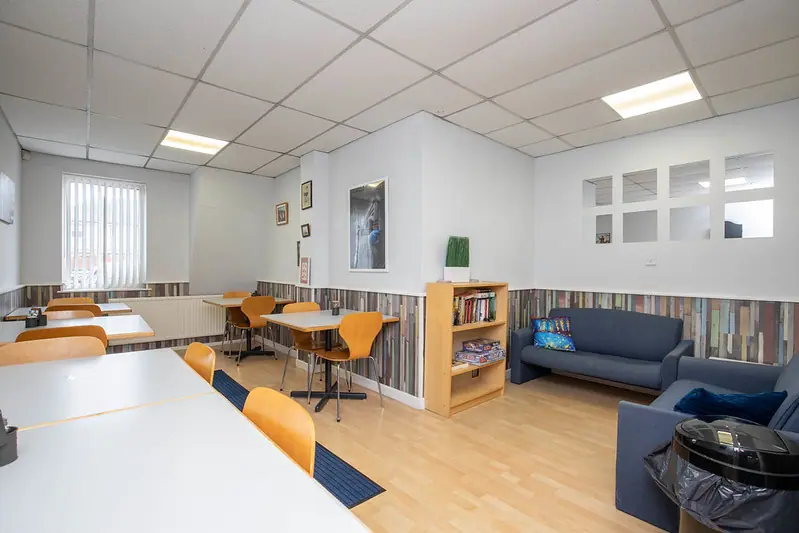 Already switched on
The list above is not a feature list. It is a to-do list you never receive.
Every line in that table exists whether you take a lease or a licence. The only question is whose diary it lands in, and whose supplier you have to chase when it goes wrong.
- Suites from roughly 80 to 1,200 sq ft
- Teams of one to thirty
- Independent and owner-managed since 2005
- Management on site, not in another city
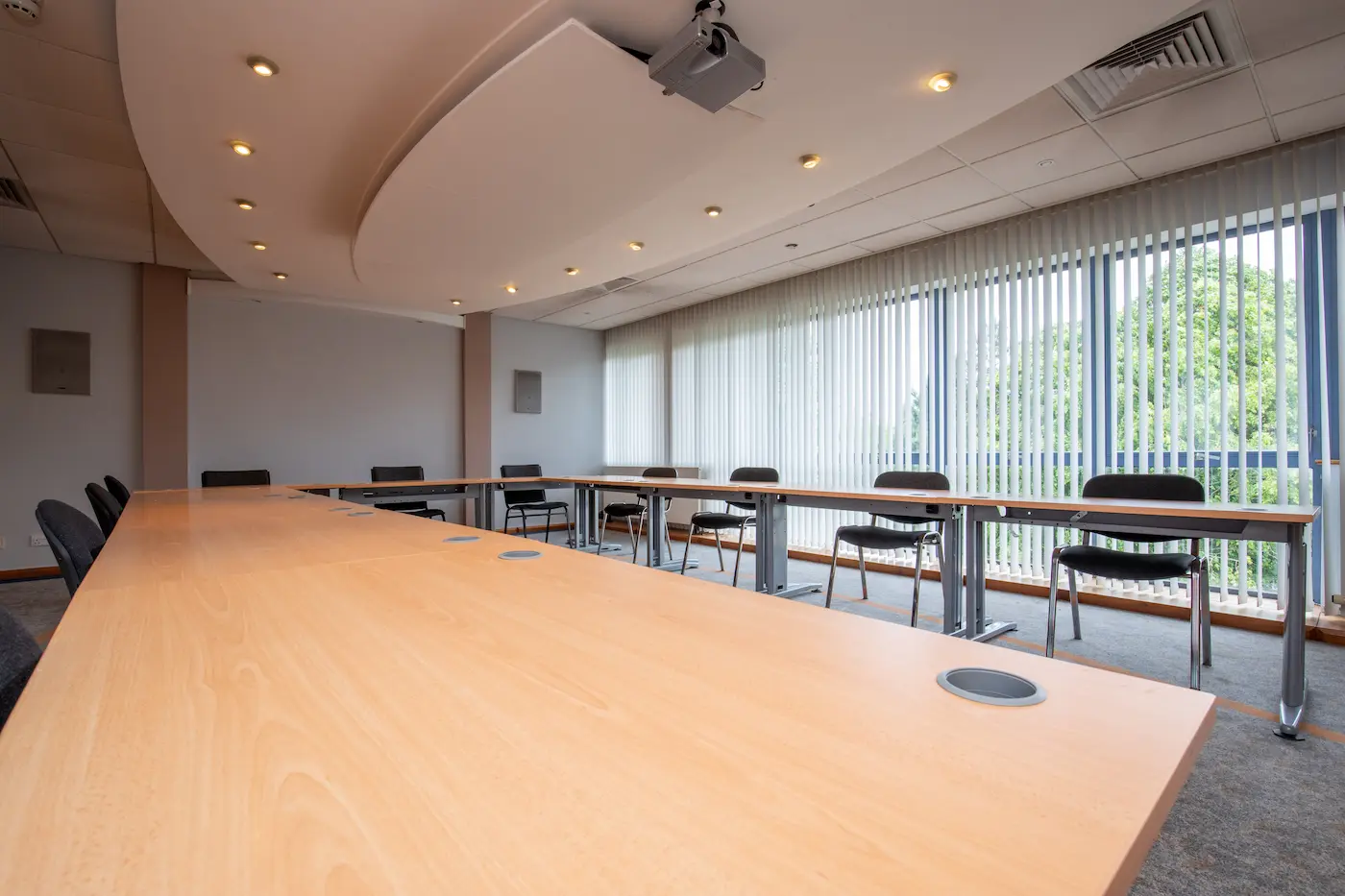 Seats up to 25
One row in that table is a whole room you do not have to build
On a lease, a room big enough to present in is floor area you rent every month of the year and fit out once. Here it is a booking. The boardroom sits on its own floor with lift access, so a pitch or an interview panel never runs through the middle of your team.
- Meeting room, seats up to 8
- Training room, seats up to 12
- Boardroom, seats up to 25
- Free visitor parking
The hidden cost is a person, not a pound
Every item a landlord leaves to you gets done by somebody in your business, for free, instead of the job you hired them to do.
In a five-person company that person is usually the owner, the office manager, or whoever is unlucky enough to be good on the phone. Chasing the broadband provider while on hold. Getting three quotes for cleaning. Booking the alarm engineer. Waiting in on a Tuesday for a desk delivery. Registering for rates. Renewing the waste contract. Ringing round because the heating has failed and the managing agent has not called back.
Put a modest number on it. Half a day a week is roughly 26 days a year of somebody’s salary spent on facilities management. In a five-person business that is a fifth of a full-time role producing no revenue at all. It never appears as a line item, which is precisely why it never gets challenged.
At a business centre the same problems exist. They are simply not yours. The heating fails, you tell reception, and somebody on site deals with it. That is what one point of contact means in practice. If you are weighing this against the numbers, our guide to what changes a Cardiff serviced office price shows how that management cost sits inside a single fee.
“Kay and the team can’t do enough for us.”Google review, Alexandra Gate Business Centre
That sentence is the entire argument on this page, put more briefly than we managed. A landlord is not unhelpful. A landlord simply is not in the business of doing any of this for you.
Speed to occupation: days versus months
A business centre suite can be occupied in days. A leased unit usually takes months.
The lease route runs roughly like this. Agent viewings. Heads of terms. Solicitors instructed. Lease negotiated. Searches. A licence for alterations if you are fitting out. Then the fit-out itself. Then furniture. Then the broadband order you should have placed at the very start, because it is the longest pole in the tent: four to twelve weeks for a commercial line is normal. Three to six months from first viewing to first working day is a realistic expectation, and longer if the fit-out involves anything beyond paint and carpet.
Our suites at Alexandra Gate are furnished, cleaned, alarmed if you want them alarmed, and connected to fibre before you walk in. Sign the licence, collect your fob, plug in. We break the timeline down in how fast you can move into a furnished Cardiff office. If your team is growing faster than a lease can be negotiated, that gap is not a convenience. It is revenue you did not have to defer.
The legal bill, honestly
A licence to occupy is a short document. Most of our tenants read it, ask two questions, and sign it without instructing anyone.
A commercial lease is a different animal. It is a long-term contract carrying repairing obligations, alienation clauses, rent review provisions and a schedule of condition you will be judged against years later. You will want a solicitor. The landlord will have one too, and their costs may well be recharged to you under the heads of terms. That is money spent before you have sat at a single desk. Again, general information, not legal advice.
The exit gap
Leaving a business centre means serving notice. Leaving a lease means finding a way out.
Five years left and you need to move? Your options are assignment (find someone the landlord approves of to take it over), subletting (if the lease permits it, and you stay on the hook), or a break clause (if you have one, and if you satisfy every condition attached to it; break clauses fail on technicalities with depressing regularity). Then dilapidations: the cost of returning the unit to the condition the lease requires. That bill arrives at the exact moment you can least afford it, which is usually why you were leaving in the first place.
Flexible licence terms, monthly or longer, mean the downside of getting your space wrong is one notice period, not five years of somebody else’s building. We go through the trade-off in more depth in our comparison of a flexible licence versus a traditional office contract.
When a commercial lease is the better decision
A lease wins in three situations, and we would rather tell you so than sell you a suite you should not take.
You need a bespoke fit-out. A lab, a workshop, a studio with acoustic treatment, a showroom, heavy plant, three-phase power. If the building has to be shaped around what you do, you need control of the fabric, and a licence to occupy a furnished suite will not give you that.
You want total control of the brand environment. Your signage on the front of the building. Your reception. Your colours on every wall. Clients arriving into a space that is unmistakably yours and shared with nobody. That is a legitimate commercial goal, and a lease is how you get it.
You have long-term certainty. If you genuinely know your headcount ten years out, you have the capital to fit out, and you have the appetite to carry the building risk, a lease can be cheaper per square foot and gives you a fixed cost base. Certainty is what you buy when you give up flexibility, and the reverse holds too.
If none of those three describe you, and for most Cardiff businesses under thirty people none of them do, the arithmetic points the other way.
None of those three sound like you? Then the question is which suite, not which model. Suites here run from roughly 80 to 1,200 sq ft and take teams of one to thirty.
Pick the suite, not the supplier list
Swipe to compare → tap any card
What it costs at Alexandra Gate
Our pricing is one monthly figure per suite, with the services in the table above sitting inside it. These are guide bands, all excluding VAT:
- 1 to 2 people: roughly £250 to £450 + VAT per month
- 2 to 3 people: roughly £400 to £700 + VAT per month
- 3 to 4 people: roughly £550 to £800 + VAT per month
- 4 to 6 people: roughly £800 to £1,250 + VAT per month
- 6 to 8 people: roughly £800 to £950 + VAT per month, with larger 7 to 8 person suites around £1,400 to £1,600 + VAT
- 8 to 12 people: roughly £1,500 to £1,800 + VAT per month
- IT and telecoms sit on a separate line, roughly £30 to £75 + VAT per month
- Meeting rooms and the training room from around £60 + VAT per day; the boardroom from around £100 to £200 + VAT per day, seating up to 25
Introductory offers are available, subject to the terms taken and the length of agreement. These are guide bands only. Confirm current pricing and availability with the centre before you plan around them.
Band by band, with the cost per desk worked out, in our breakdown of what a serviced office costs per month.
When you compare that against a lease, do not compare rent to licence fee. Compare rent plus rates plus service charge plus insurance plus utilities plus broadband plus cleaning plus waste plus security plus furniture plus legal fees plus your own time. That is the honest like-for-like, and once you build it out, our serviced offices in Cardiff tend to look very different from the headline-rent unit down the road.
Where we are, and why the location works
Alexandra Gate Business Centre sits at 2 Alexandra Gate, Ffordd Pengam, Pengam Green, Cardiff, CF24 2SA. That is east Cardiff, roughly two miles from the city centre.
The A48 Eastern Avenue runs past the door, so M4 Junction 30 at Cardiff Gate is a straight run to the north-east, and Ocean Park and the Cardiff Bay link road sit just to the south. Newport Road Retail Park, Tesco Extra, fuel and cash points are a two-minute drive. Parking is free on site for your staff and your visitors, with electric car charging available. That is more than most city-centre leased units can say, and a genuine consideration when a client is driving in from Newport, Barry, Caerphilly or Bridgend.
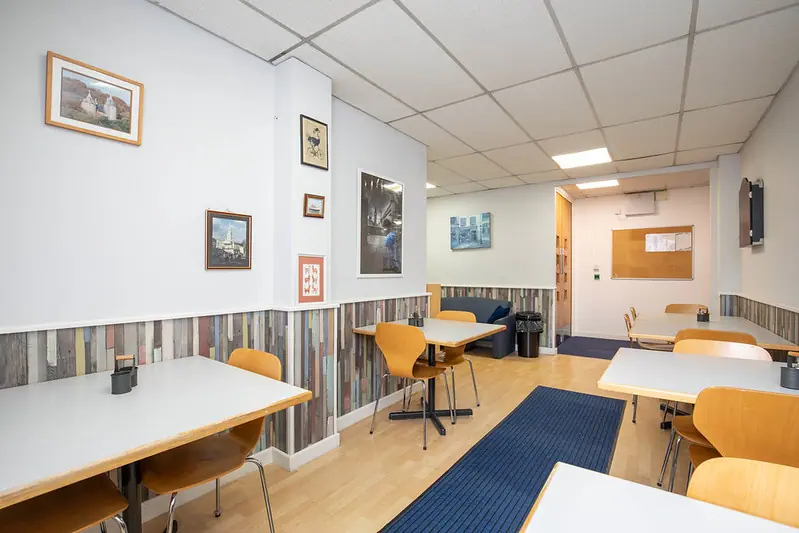 On site
Barista coffee and sourdough focaccia, without a fit-out
We have run this centre independently since 2005. Management is on site, not in a call centre in another city. Offices run from roughly 80 to 1,200 sq ft, suiting teams of one to thirty. There is a cafe on site doing barista coffee and sourdough focaccia, breakout and collaboration space, printing, postage, and a pet-friendly policy.
Not ready for a physical office yet? Our virtual office services give you a Cardiff business address and mail handling without the desk.
FAQs
Is a business centre more expensive than a commercial lease?
Per square foot, usually yes. All-in, often no. The licence fee looks higher than headline rent because it already contains rates, service charge, utilities, broadband, cleaning, waste, security, reception, furniture and repairs. Add all of those to a lease and the gap narrows sharply. For small teams it frequently closes altogether once you count the time you would otherwise spend managing it.
Do I pay business rates in a serviced office?
A serviced licence typically bundles the occupancy costs that a lease would leave to the tenant, and business rates are usually part of that picture. The specifics depend on the suite and the agreement, so ask us directly on 029 2089 4700 and we will tell you exactly what your monthly figure covers. This is general information, not legal or rating advice.
How quickly can I move into an office at Alexandra Gate?
Days, not months. Suites are furnished, cleaned, secured and connected to fibre before you arrive, so there is no broadband install wait, which on a leased unit commonly runs four to twelve weeks, and no furniture to buy. Once the licence is signed and your fobs are issued, you can work.
Can I get out of a business centre agreement more easily than a lease?
Yes. Our licence terms are flexible, monthly or longer, and leaving means serving the agreed notice. Exiting a commercial lease usually means assignment, subletting or a break clause, plus a dilapidations bill for returning the unit to its required condition. That is a materially different level of commitment.
When should I take a lease instead?
When you need a bespoke fit-out the building must be adapted for, when full control of your own branded environment matters commercially, or when you have ten years of genuine certainty about headcount and the capital to fit out. Outside those cases, a managed suite usually gives a small Cardiff business more office for less hassle.
Bespoke fit-out, your branding on the front, or ten years of genuine certainty about headcount and the capital to pay for it.
That is a real answer, and we would rather you heard it here than after signing something with us.
Under thirty people, no fit-out needed, and a preference for one invoice over eleven suppliers.
Four more angles on the same decision
Come and see the difference
The quickest way to settle this is to walk the building. Come to Ffordd Pengam, look at a suite that already has desks in it, meet the people who would answer the phone when your heating fails, and take a coffee from the cafe while you think it over.
Call 029 2089 4700, email info@alexandragate.co.uk, or get in touch through our contact page. We will show you what your team would actually pay, and what you would stop having to do yourself.
Headline rent and headcount. We will build the honest like-for-like in front of you.
Explore serviced offices in Cardiff
See what is included →All figures are guide bands and exclude VAT. Confirm current pricing and availability with the centre. This article is general information about how these arrangements usually work, not legal advice.
