
Yes. A virtual office can lawfully be your company’s registered office, provided the address meets the appropriate address duty that came into force on 4 March 2024 under the Economic Crime and Corporate Transparency Act 2023. That duty is about the address, not the label. Post delivered there has to come to the attention of a person acting on behalf of the company, and delivery has to be capable of being recorded by an acknowledgement of receipt. A staffed building in Cardiff passes that test. A PO Box or an unstaffed mail drop does not, and has not since March 2024.
Both tests have to be satisfied. Passing one is not enough.
- Test oneA document delivered there would be expected to come to the attention of a person acting on behalf of the company.
- Test twoDelivery is capable of being recorded by an acknowledgement of receipt.
Key Takeaways
- Using a virtual office as a registered office is legal. Using an address where nobody is present to receive documents is not.
- Two tests apply to every registered office: documents must reach a person acting for the company, and delivery must be capable of being recorded by an acknowledgement of receipt.
- PO Boxes and unstaffed mail drops stopped qualifying on 4 March 2024. Staffed addresses qualify.
- Companies House can move a company to a default address and give it 28 days to supply a proper one.
- Identity verification at Companies House became compulsory on 18 November 2025 for directors, people with significant control and their equivalents, either free through GOV.UK One Login or through an Authorised Corporate Service Provider.
- Providing a registered office is a Trust or Company Service Provider activity under the Money Laundering Regulations 2017, which is why any legitimate provider asks for your identity documents before switching the address on.
- Service of documents at your registered office counts as service on the company, so an address nobody attends is a legal risk rather than an administrative one.
Our Cardiff registered office and virtual office services run from a building with a reception desk staffed through the working day, which is the part of the rule most providers cannot satisfy. Call 029 2089 4700 and we will tell you what we would need from you to switch the address across.
What the appropriate address rule actually says
Every UK company’s registered office must be an appropriate address, which means an address where a document delivered there would be expected to come to the attention of a person acting on behalf of the company, and where delivery is capable of being recorded by an acknowledgement of receipt. Both limbs have to be satisfied. Passing one is not enough.
The rule came from the Economic Crime and Corporate Transparency Act 2023 and started on 4 March 2024. It applies to companies already on the register as well as to new incorporations, which is why a great many companies formed years earlier suddenly had a problem with an address that had been perfectly acceptable the week before.
What “come to the attention of a person acting on behalf of the company” means
Somebody has to be capable of receiving the document and connecting it to your company. That person does not have to be a director. A receptionist who takes in a recorded delivery item, logs it against your company name and tells you it has arrived is acting on behalf of the company for this purpose. An empty hallway with a communal letterbox is not, because nothing at that address is capable of noticing the document, let alone associating it with you.
What “capable of being recorded by an acknowledgement of receipt” means
Delivery has to be provable. A courier hands the item to someone, that someone signs or otherwise records it, and there is now evidence the document arrived. The word to hold on to is capable. The rule does not require a signature on every envelope. It requires an address where an acknowledgement could be given, which is why a manned reception passes and a locked box on a wall does not: nobody at the box can ever sign for anything.
This is a live area of law, and Companies House continues to publish guidance as the regime beds in, so confirm the current position on GOV.UK before you file anything.
What changed on 4 March 2024, and what fails now
Before that date a company could use almost any address it had permission to use, including a PO Box and an unattended forwarding address, and Companies House had no general power to object. From 4 March 2024 those setups stopped being compliant, with no transition period for the address itself.
Three pass both tests. Four fail both. One leaves you relying on somebody with no duty to you.
- Passes both tests, 3 of 8
- Fails both tests, 4 of 8
- Relying on goodwill, 1 of 8
Scroll the table → hover any row to focus it
| Address type | Does a person receive it? | Can receipt be acknowledged? |
|---|---|---|
| Staffed business centrePasses both | Yes. Reception logs the item against your company name. | Yes. Someone on site can sign for a recorded item. |
| Your home, where you livePasses both | Yes. You are plainly a person acting for the company. | Yes, but the address is published permanently. |
| Accountant’s officePasses both | Yes, when staffed and they have agreed to act. | Yes. Ask first: a letterhead is not an agreement. |
| PO BoxFails both | No. Nothing is received on your behalf. | No. Nobody at the box can ever sign. |
| Royal Mail redirectionFails both | No. A redirect is an instruction, not an address. | No. There is no point of receipt at all. |
| Unstaffed serviced officeFails both | No. There is nobody on site. | No. There is nobody to sign. |
| Communal letterbox, shared unitFails both | No. Nobody’s job is to connect an envelope to you. | No. There is no acknowledgement to give. |
| Shop taking parcelsRelying on goodwill | Closer to compliant, but the assistant has no relationship to your company. | Possible, though nobody is obliged to tell you anything arrived. |
Can I still use a PO Box?
No. A PO Box fails because nobody there can bring a document to the attention of a person acting for the company. Nothing is received on your behalf. Nothing is acknowledged. A Royal Mail redirection is in the same position, because a redirect is an instruction about where post travels next rather than an address at which anything is received.
You can still use a PO Box for ordinary correspondence if it suits your business, and plenty of firms do. It just cannot be the registered office, and it should not be the address you put in front of a client either. We have set out the credibility side of that argument in our comparison of a virtual office address against a PO Box.
What about unstaffed mail drops, locked postboxes and empty units?
Each of them fails the acknowledgement of receipt test for the same reason. A serviced office with no one on site has no one to sign. A shared industrial unit with a communal letterbox has no one whose job it is to connect an envelope to your company. A shop that takes parcels for local businesses is closer to compliant, but you are relying on a retail assistant with no relationship to your company and no obligation to tell you anything arrived.
Small print matters here. A provider who describes the service as mail forwarding rather than a staffed address is often telling you, accurately, that nobody is there. Read the words they chose.
Will Companies House reject my address because it is a virtual office?
The label is not the risk. Companies House does not maintain a list of banned providers or refuse addresses because a business centre operates them. It looks at whether the specific address is appropriate, and thousands of companies are registered at staffed business centres across the UK without incident.
What draws attention is an address where nothing is received. Complaints from creditors whose letters bounced back, undelivered statutory post, an address hosting companies that cannot be contacted, and mail returned to Companies House itself are the sorts of things that surface a problem. Money laundering enforcement under the Money Laundering Regulations 2017 has also made unstaffed addresses hosting large numbers of shell companies a target, which is precisely why the appropriate address duty exists.
Consider a two person design studio incorporated from a Grangetown flat that later bought the cheapest address it could find online. The address was a shutter and a letterbox. Their accountant only discovered the problem when an HMRC letter went unanswered for two months and a penalty followed. Nothing about the studio was improper. The address simply had nobody in it, and the consequences landed on the company rather than on the provider.
What happens if Companies House decides your address is not appropriate
Your company gets moved to a default address held by Companies House, and you are given 28 days to supply an appropriate one. That is the practical consequence, and it is not a fine or a court process. It is administrative, quick and public.
While your company sits at the default address, its record on the public register shows it, which anybody checking you can see. Post sent to your old address is no longer reaching you in any reliable way, and Companies House does not become your postal service. The 28 day window exists so you can put a real address in place, and a company that fails to do so risks the register treating it as a company that cannot be contacted, with strike-off action a possible end point.
Get a provider agreement in place first, because you cannot file an address you do not yet have the right to use. Then change the registered office through the Companies House filing service using your company number and authentication code. Tell HMRC, your bank, your insurer and anyone who invoices you once the change shows on the register, and check the address on your next confirmation statement.
Companies House may ask for evidence of your entitlement to use the new address, so confirm the current process and any documentary requirement on GOV.UK before you file.
Why an address you cannot attend is a legal problem, not an admin one
Service of documents at the registered office is effective service on the company. A claim form, a statutory demand or a winding up petition delivered to your registered office has been served on you, whether or not anybody opened it. The acknowledgement of receipt test exists for exactly that reason: the law needs to know documents can actually land somewhere.
The consequence is worth sitting with. A default judgment can be entered against a company that never saw the claim. The company’s answer, that the post went to an address nobody attends, is not a defence, it is an admission. That is why we take the view that the cheapest possible address is a false economy for any company with real trading exposure.
 A person
A person. That is the whole of it.
An item delivered by courier or by recorded post is handed to someone on reception, signed for, logged against your company name and held securely until you collect it or we send it on. There is an acknowledgement, a record and a named human, which is the mechanism the legislation describes.
- Reception staffed Monday to Friday
- Recorded delivery signed for on site
- Post sorted daily, outgoing post franked
- Independent and owner managed since 2005
Home address, accountant’s office or virtual office: which qualifies?
All three can be appropriate addresses. Your home passes both tests when you live there, since you are plainly a person acting on behalf of the company and you can sign for a delivery. Your accountant’s office passes when the practice is staffed and has agreed to act as your registered office, which is a different thing from letting you use their address on a letterhead. Ask first.
The real difference is not legality. It is publication. A registered office appears on the public register, permanently and searchably, so a home address used as a registered office becomes the address anybody can find, including customers who dispute an invoice and the sort of caller you would rather not meet at your front door. Removing a home address from the register later is possible in limited circumstances but is a process, not a switch, and historical filings persist.
There is also a distinction worth holding clearly. A director’s service address belongs to the individual, can be anywhere in the world, and appears on the public register. The registered office belongs to the company, must sit in the company’s UK jurisdiction, and must be an appropriate address. Directors also give Companies House a residential address, which is not published on the public register. A registered email address was introduced alongside the March 2024 changes and is tied to the confirmation statement, and that too is not published.
Take a Bridgend contractor trading through a limited company from the family house. Two subcontractor disputes and one debt collection letter later, his wife had answered the door to a stranger holding paperwork. Moving the registered office to a staffed building in Cardiff ended that, and his customers saw a business address instead of a residential street.
We have written more on that trade off in our piece on using a home address against a business mailbox. For the narrower question of how a business address differs from a registered office in day to day use, our guide to the difference between a business address and a registered office address covers it in more depth than this page needs to.
How to check a registered office provider before you sign
Ask about anti-money-laundering supervision before you ask about price. Providing a registered office, business address or correspondence address is a Trust or Company Service Provider activity under the Money Laundering Regulations 2017. A provider carrying on that activity must be supervised for anti-money-laundering purposes and must carry out customer due diligence on you. A provider who takes your card details and switches an address on without ever asking who you are is not doing the job properly, and that is a reason to walk away rather than a convenience.
The related term you will meet is Authorised Corporate Service Provider. An ACSP must be registered with a UK anti-money-laundering supervisory body, and that status is what allows a firm to file on a client’s behalf or to verify a client’s identity for Companies House. It is not itself a precondition to selling you a registered office address, so a provider who is not an ACSP is not thereby non compliant. Know which question you are asking.
- Who is supervised for anti-money-laundering purposes in relation to this service, and under which supervisory body?
- Is the building staffed during working hours, and who signs for a recorded delivery item?
- How am I told when statutory post arrives, and how quickly?
- Is scanning, forwarding or collection included, and what is the arrangement for items that cannot be scanned?
- What happens to my post and my registered office status if I miss a payment?
- Can I visit the address before I sign?
That last one is the most revealing question on the list, and the answers divide neatly.
“Kay and the team can’t do enough for us.”Google review, Alexandra Gate Business Centre
The appropriate address rule turns on there being a person. Kay Brook runs this building day to day and Janet Bowden looks after tenant accounts, which is a slightly unusual thing to put in a compliance article, except that it is exactly what the legislation is asking about.
Identity verification, and why you will be asked for documents
Companies House identity verification became compulsory on 18 November 2025, having opened on a voluntary basis on 8 April 2025. It applies to directors, to the equivalents of directors including members, general partners and managing officers, to directors of overseas companies registered in the UK, and to people with significant control. Two routes exist: free through GOV.UK One Login, which includes an in-person option at participating Post Offices, or through an Authorised Corporate Service Provider.
That regime sits alongside the due diligence a supervised address provider has to carry out. Expect to hand over photographic identification and proof of your own address before any registered office service goes live. Rules in this area are still bedding in, so check the current requirements on GOV.UK before you file.
Does a virtual office address look bad to banks, clients or credit agencies?
Legality and perception are separate questions, and the perception question has a different answer depending on the address. Banks and credit reference agencies do not object to business centre addresses as a class. What they look at is consistency: whether your registered office, your principal place of business and the address on your website and invoices tell the same story, and whether the address is one where a real business could plausibly operate.
A staffed business centre in Cardiff with a car park, a reception and meeting rooms reads as a place of business, because it is one. A residential flat reads as a residential flat. An address shared by an implausible number of dormant companies reads as exactly what it is, and that is the pattern that causes friction during bank onboarding, not the words virtual office.
 Same address
A client who wants to meet at the address can be given a room and a time
Post is sorted daily and outgoing post is franked, so what arrives for you is dealt with rather than piled up. Meeting rooms are on site. Reception is staffed Monday to Friday, typically 8:30am to 4:45pm, and the same desk can answer your telephone in your company name if you want the address and the phone to match.
What a staffed Cardiff building gives you that a mail box cannot
A person. That is the whole of it, and it is what the appropriate address rule turns on. At Alexandra Gate, an item delivered by courier or by recorded post is handed to someone on reception, signed for, logged against your company name and held securely until you collect it or we send it on. There is an acknowledgement, a record and a named human, which is the mechanism the legislation describes.
Ask any provider to confirm in writing that their address is attended during business hours, that recorded delivery items are signed for on site, and that companies are notified when statutory post arrives. Keep that confirmation with your company records. It costs nothing and it is the evidence you would want on the day somebody argues about whether a document was served.
What sits behind the registered office here
Swipe to compare → tap any card
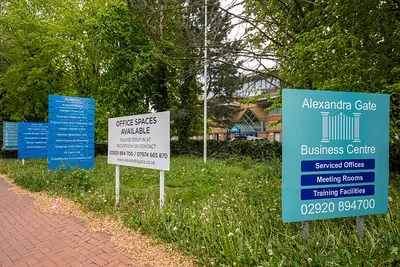 The addressRegistered office and virtual office
A CF24 2SA address at a staffed building, with mail handling and forwarding on the same account.
Take the registered office →
The addressRegistered office and virtual office
A CF24 2SA address at a staffed building, with mail handling and forwarding on the same account.
Take the registered office →
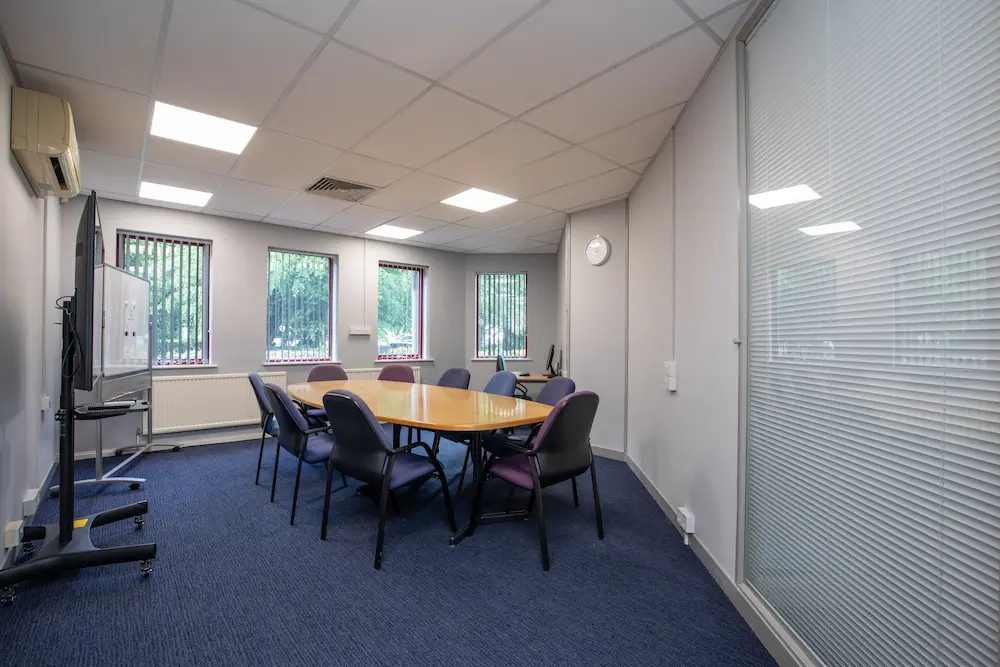 By the hour or dayMeeting rooms
Somewhere to meet a client at the address that appears on your invoices.
Hire a room by the day →
By the hour or dayMeeting rooms
Somewhere to meet a client at the address that appears on your invoices.
Hire a room by the day →
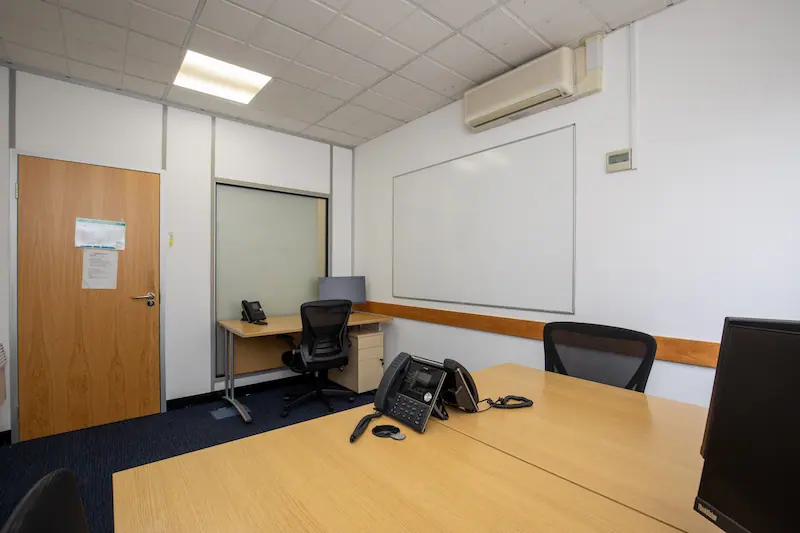 2 to 30 peopleServiced offices
When the registered office becomes a place your team actually works.
Compare the serviced offices →
2 to 30 peopleServiced offices
When the registered office becomes a place your team actually works.
Compare the serviced offices →
 Up to 6 peopleSix person office
The same address, the same reception, with a door of your own behind it.
View the six person office →
Up to 6 peopleSix person office
The same address, the same reception, with a door of your own behind it.
View the six person office →
Frequently Asked Questions
Is it legal to use a virtual office as a registered office in the UK?
Yes, provided the address is an appropriate address under the rules that started on 4 March 2024. The address must be one where a delivered document would come to the attention of a person acting for the company, and where delivery could be recorded by an acknowledgement of receipt. A staffed office building satisfies both. A PO Box or an unattended mail drop does not.
What is the difference between a registered office and a director’s service address?
The registered office belongs to the company, must be in the company’s UK jurisdiction and must be an appropriate address. A service address belongs to the individual director, can be anywhere in the world, and is where post for them personally is sent. Both appear on the public register. Directors separately give Companies House a residential address, which is not published.
Can Companies House really move my company to a different address?
Yes. Where it decides an address is not appropriate, it can move the company to a default address and give the company 28 days to supply a proper one. The change is visible on the public register while it lasts, and a company that does not supply a compliant address risks further action on the register.
Does my registered office provider have to be AML supervised?
Providing a registered office, business address or correspondence address is a Trust or Company Service Provider activity under the Money Laundering Regulations 2017, so a provider carrying on that activity must be supervised for anti-money-laundering purposes and must carry out customer due diligence. That is separate from being an Authorised Corporate Service Provider, which is the registration a firm needs to file at Companies House on your behalf or to verify your identity. Ask providers which applies to them rather than assuming the two are the same thing.
Do I need to verify my identity with Companies House?
Directors, people with significant control and their equivalents, including members, general partners and managing officers, and directors of overseas companies registered in the UK, are within scope of identity verification, which became compulsory on 18 November 2025. Verification is free through GOV.UK One Login, including an in-person route at participating Post Offices, or can be done through an Authorised Corporate Service Provider.
Four more questions about the address itself
A registered office in Cardiff with somebody actually in the building
The rule is simpler than the commentary around it. Companies House wants an address where a document can be received by a person and where that receipt can be recorded. Buy that, and the legal question goes away. Buy a letterbox, and you are one delivery away from finding out what effective service means.
Alexandra Gate Business Centre has operated as an independent, owner managed centre at 2 Alexandra Gate, Ffordd Pengam, Pengam Green, Cardiff CF24 2SA since 2005. It is two miles east of the city centre with direct access to the A48(M) and the M4, free on site parking, 24/7 fob access for tenants and a reception desk staffed through the working day, which is the desk that would sign for your company’s post. Janet Bowden looks after tenant accounts and Kay Brook, our Centre Manager, runs the building day to day.
An address you have stood in is the only kind worth putting on the public register
See what is included with a Cardiff registered office and business address, including mail handling, forwarding and meeting room access on the same account. Then call 029 2089 4700 or come and see the building before you commit.
We will confirm in writing that the address is attended, that recorded items are signed for, and that you are told when statutory post arrives.
What is included →This page is general information about the registered office rules and is not legal advice. Companies House guidance continues to develop, so confirm the current position on GOV.UK before you file.
