
Before you sign a Cardiff office licence, get four things in writing: the deposit and the conditions for its return, the notice period and how notice must be served, what happens at the end of the term if neither side acts, and who owns your phone numbers and broadband line when you leave. Those four cause almost every dispute. The rest is easier to fix.
What it is held against, and the number of days inside which it comes back.
How long, when it takes effect, and exactly how it must be served.
What happens at term end if neither side does anything at all.
Who owns your phone numbers and broadband line the day you leave.
We are an independent, owner-run centre at 2 Alexandra Gate, Ffordd Pengam, Pengam Green, CF24 2SA, letting serviced offices in Cardiff since 2005. This is the checklist we would want a friend to use before signing anything, with us or with anyone else. Call 029 2089 4700 and we will send our exact deposit and notice terms before you book a viewing.
Read the agreement at your own kitchen table before you spend an hour in ours. We will email the deposit terms, the notice clause and the guide band for your headcount, then you decide whether the building is worth the trip.
A quick caveat. This is general guidance, not legal advice. If a clause is material to your business, take your own advice on it.
An office licence is not a lease, and the difference bites on exit
A licence is permission to occupy space. A lease is an interest in land. That distinction sounds academic until the day you want to leave.
Under a lease you hold an interest in part of a building for a defined term, and a protected business tenancy can carry security of tenure under the Landlord and Tenant Act 1954, a statutory right to renew. A licence to occupy usually does not. It is permission, ended in line with its own terms, with the operator keeping control of the space. That is why serviced office agreements stay short and can end on a month’s notice, while a lease locks you in for three, five or ten years with a dilapidations claim waiting at the finish.
Neither model wins in the abstract. A licence buys flexibility, paid for monthly. A lease is cheaper per square foot and far more expensive to escape. We set the trade-off out in our comparison of a flexible licence versus a traditional office contract.
You are buying the exit
- Ends in line with its own terms, usually on a month’s notice
- Furniture, cleaning, utilities and reception inside one fee
- No fit-out to fund, no dilapidations claim at the finish
- Move to a bigger or smaller suite without leaving the building
You are buying the term
- Three, five or ten years, with a break clause if you negotiated one
- Rates, service charge, utilities and insurance billed separately
- Fit-out up front, reinstatement at the end
- Security of tenure can apply, and so can the cost of ending it early
How big should a Cardiff office deposit be, and what does it cover?
Roughly one to two months’ licence fee is typical across the Cardiff market, held against unpaid fees and damage beyond fair wear and tear. A higher figure is not automatically a red flag. A new company with no filed accounts is often asked for more. What matters is that the number is explained.
A deposit should cover unpaid fees, unpaid IT and telecoms charges, unreturned fobs and keys, and genuine damage. It should not fund routine redecoration or replace furniture that has simply aged, and it should never quietly become a renewal fee.
Ask three things:
- Is it held against a defined list of liabilities, or is the purpose open-ended?
- Is it returned within a stated number of days after exit: 14, 28, 30?
- Is every deduction itemised in writing, with costs?
An honest operator will put a return window in the agreement. If they will not commit to that in writing, you have learned something useful before you signed.
If you are asked for a personal guarantee alongside the deposit, treat it as a far bigger decision. It puts your own assets behind the company’s obligations. Take advice before you sign one.
What “fair wear and tear” means in a furnished suite
Fair wear and tear is the deterioration you would expect from normal use over the time you were there. Scuffed skirting, a worn chair castor, marks on a desk, a few picture hooks. All normal. A hole punched through a partition, a burn on a desk, a wall repainted without asking. Not normal.
Furnished suites make this easier, because the furniture sits on an inventory. Our offices come with desks, chairs and storage, so the test is simple: is the item still there, and is its condition consistent with how long you occupied the room?
Ten minutes on move-in day protects you:
- Photograph everything, dated. Walls, desks, chairs, carpet, door.
- Get a written furniture inventory, signed by both sides.
- Note existing damage the day you take the keys, and ask that the photographs and inventory form the baseline for the exit inspection.
An operator who will not sign an inventory at the start is setting up an argument at the end. Ask what you may change, too. Logo on the door, extra cabling, a TV on the wall. Get permission by email and keep it, or reinstatement becomes your cost.
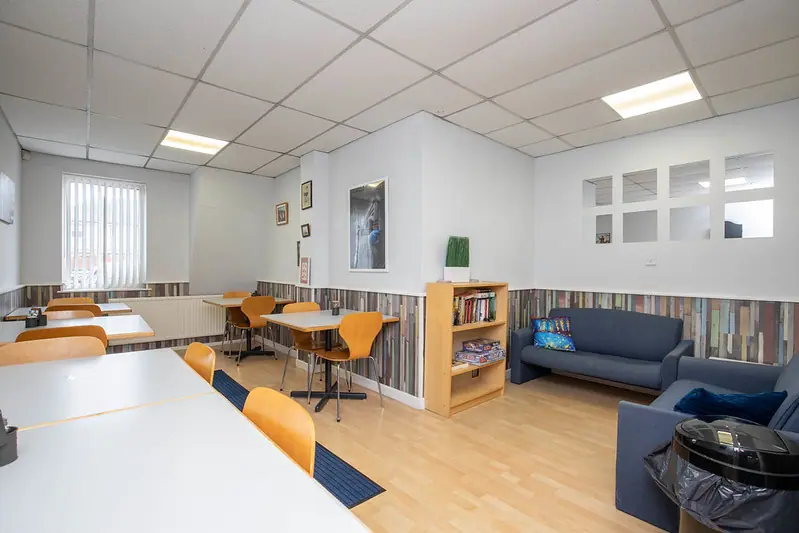 Day one
Photograph the room before you put a laptop on the desk
The inventory and the dated photographs are the only things standing between you and somebody else’s opinion of “fair wear and tear” eighteen months from now. Do it on move-in morning, and get both sides to sign.
- Furnished suites, desks and storage included
- Signed inventory at handover
- Independent and owner-run since 2005
Notice periods: how long, and how must notice be served?
One month’s written notice is common on rolling monthly licences in Cardiff, one to three months on longer fixed terms. Three details matter more than the headline length.
When notice takes effect. Does one month’s notice given on 3 September end the agreement on 3 October, on 31 October, or on 31 December because notice can only expire on a quarter date? Ask for a worked example with real dates.
How notice must be served. Email to a named address? Recorded delivery? Handed in at reception and countersigned? If the agreement demands written notice by post and you send an email, you may have served nothing at all. Follow the method exactly and keep proof.
What happens if you miss it. On many agreements, missing the window by one day rolls you into another full period. Fair enough if stated clearly. Sharp practice if buried.
Flexibility, paid for monthly
- Typical notice: one month
- Early exit: usually possible on notice
- Monthly rate: higher, because you are buying the option to go
- Suits startups, project teams and businesses in flux
- Main risk: the rate gets reviewed more often
A better rate, and a commitment
- Typical notice: one to three months, often only at term end
- Early exit: a break clause, or nothing
- Monthly rate: often lower, or carries an introductory offer
- Suits settled teams with predictable headcount
- Main risk: you are committed if the business changes
We offer flexible licence terms, monthly or longer, and we will talk you through which fits your headcount before you commit. If you would rather see the pricing logic first, our guide to what actually changes the price of a Cardiff serviced office explains what moves a quote.
What happens if you need to leave early?
On a rolling licence you serve notice and go. Inside a fixed term you are committed for the balance unless the agreement gives you a break, and you should assume you will be asked to pay.
Serve a break clause, if you have one. Check its conditions. Many depend on all sums being paid and vacant possession given. Miss one and the break fails.
Negotiate a surrender. A reasonable operator will talk, especially if the suite re-lets quickly. A payment covering the void period is common.
Move within the building. If you have outgrown or under-grown the space, a different suite in the same centre beats a break. We run offices from roughly 80 to 1,200 sq ft, so a team going from four to eight, or eight back to three, can usually be rehoused. That is the whole logic behind upsizing without moving building. Ask. It costs nothing.
Change the room, keep the address
Moving suite inside the centre costs you a morning and a new door sign. Breaking a term costs you the balance of it. Suites here run from roughly 80 to 1,200 sq ft on the same fob, the same broadband and the same parking, so a team that grows or shrinks does not have to renegotiate anything except the room.
Assign or share. Most licences prohibit this outright. Check before you promise a desk to a friend.
Automatic renewal clauses: read this twice
An auto-renewal clause rolls your agreement into a new term unless you give notice by a set date. Legitimate, common and fine, provided you know the date.
Here is the clause that hurts. A twelve-month term renewing for another twelve unless three months’ notice is given before the anniversary. Sign in July, forget, and by April you are locked in for another year. Diarise the deadline the day you sign.
Ask whether the agreement renews automatically, on what notice, by what date, whether the fee changes on renewal, and whether any change is capped. An increase should be flagged in advance and in writing, not turn up on an invoice.
Your phone numbers, broadband and post on exit
These are business assets, and the most overlooked part of any exit. Sort them before you sign, not in your final fortnight.
Phone numbers. If the centre provides the number, ask whether it can be ported out, how long that takes, and what it costs. Some cannot be. If your number is on your van, your website and four thousand business cards, you want to know on day one.
Broadband. The connection belongs to the building. Ours runs from shared fibre access up to dedicated 500 Mbps lines, and it stays here. Lead times for a new dedicated line elsewhere run to weeks, so order early.
Billing. IT and telecoms sit on a separate line here, roughly £30 to £75 + VAT per month depending on office size. Check when it stops: the day you hand back the keys, or the end of the billing month?
Mail. Ask how long the centre will forward post, and whether there is a charge. Our reception sorts incoming mail daily and franks outgoing post. If you want to keep a Cardiff address after moving on, our virtual office services hold your registered address steady while the rest of the business moves.
“Highly competent and professional service always given.”Google review, Alexandra Gate Business Centre
Paperwork is where competence shows or does not. The people who have signed, renewed and occasionally left this building are better placed than we are to tell you how the terms were handled.
What a fair exit inspection looks like
Booked in advance, carried out with you present, measured against the signed move-in inventory, and followed by an itemised written report within days. What it should not be: an inspection done after you have gone, against no baseline, producing a lump sum with no breakdown. If a deposit is withheld, ask what for, item by item.
- Confirm the exit date and inspection slot in writing.
- Clear the suite completely, then walk it with the centre manager and photograph it again, dated.
- Return every fob, key and access card, and get a receipt.
- Agree any deductions in writing, and expect the balance back inside the window stated in your agreement.
We manage this building ourselves. No regional office, no national policy to hide behind. That is part of the wider case for choosing a business centre over a commercial landlord in Cardiff.
Questions to ask before you sign
Print this. Take it to the viewing.
Three of the seven are about dates, and dates are where licences bite
- Money, 2 of 7
- Dates, 3 of 7
- Assets, 2 of 7
Scroll the table → hover any row to focus it
| Question | A good answer | A warning sign |
|---|---|---|
| What is the deposit held against, and when is it returned?Money | A stated sum, defined liabilities, a set number of days | Open-ended purpose, no timescale |
| When does notice take effect?Dates | A worked example, real dates | Expiry only on quarter dates |
| How must notice be served?Dates | A named method and address | Wording you could get wrong |
| Does it renew automatically?Dates | Yes or no, with the deadline date | Auto-renewal buried in clause 14(c) |
| Can the fee increase?Money | Notice plus a cap or stated basis | “Subject to review”, no mechanism |
| Is there a signed furniture inventory?Assets | Yes, both sides, day one | “We don’t usually bother” |
| Can I port my phone number out?Assets | A straight yes or no, and the cost | Nobody knows |
What you would actually be signing for
Swipe to compare → tap any card
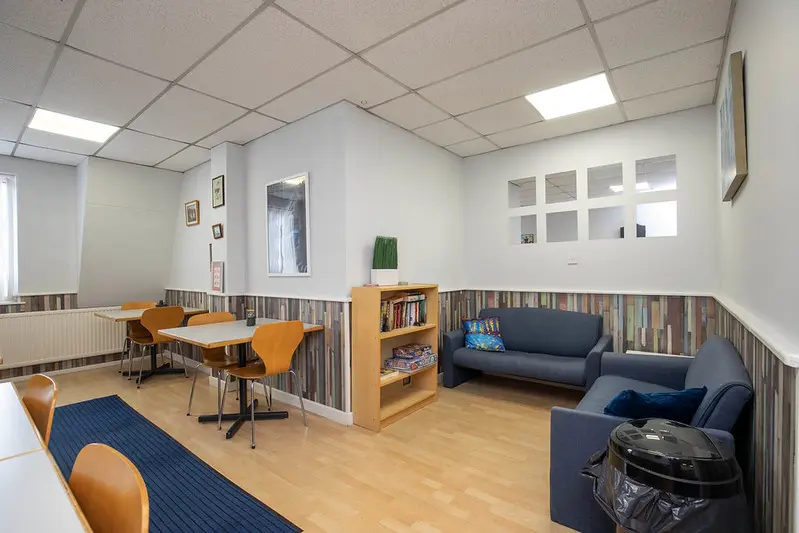 1 to 2 peopleTwo person office
The smallest licence we write, furnished and on the same monthly terms.
Take the two person office →
1 to 2 peopleTwo person office
The smallest licence we write, furnished and on the same monthly terms.
Take the two person office →
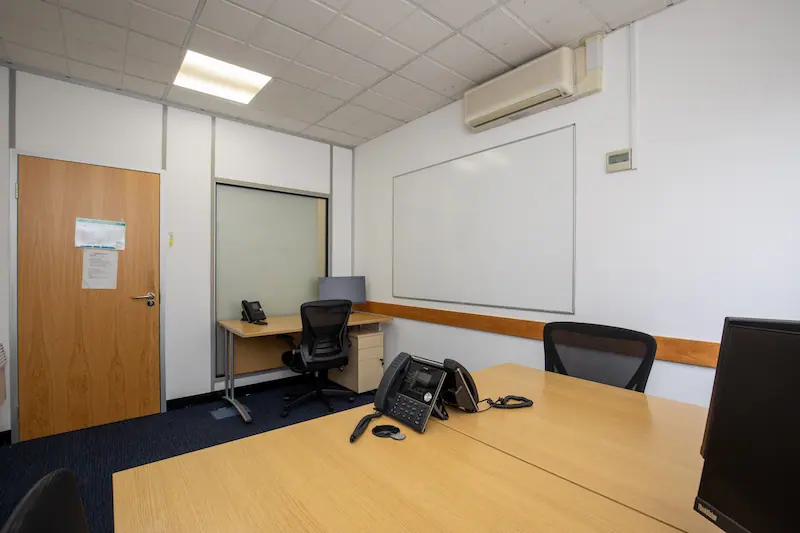 Up to 6 peopleSix person office
Where most teams move to rather than breaking a term early.
Explore the six person office →
Up to 6 peopleSix person office
Where most teams move to rather than breaking a term early.
Explore the six person office →
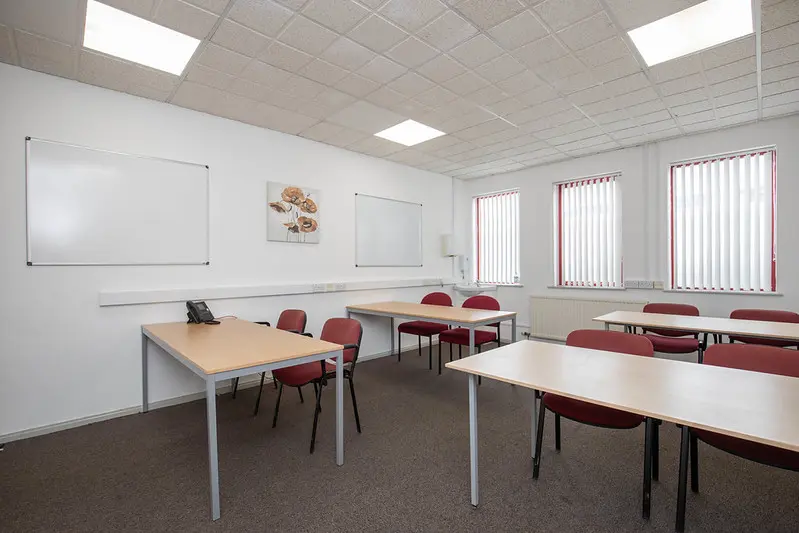 Open plan teamLarge bright office
Department-sized floor without a fit-out or a dilapidations bill at the end.
Take a look at the large bright office →
Open plan teamLarge bright office
Department-sized floor without a fit-out or a dilapidations bill at the end.
Take a look at the large bright office →
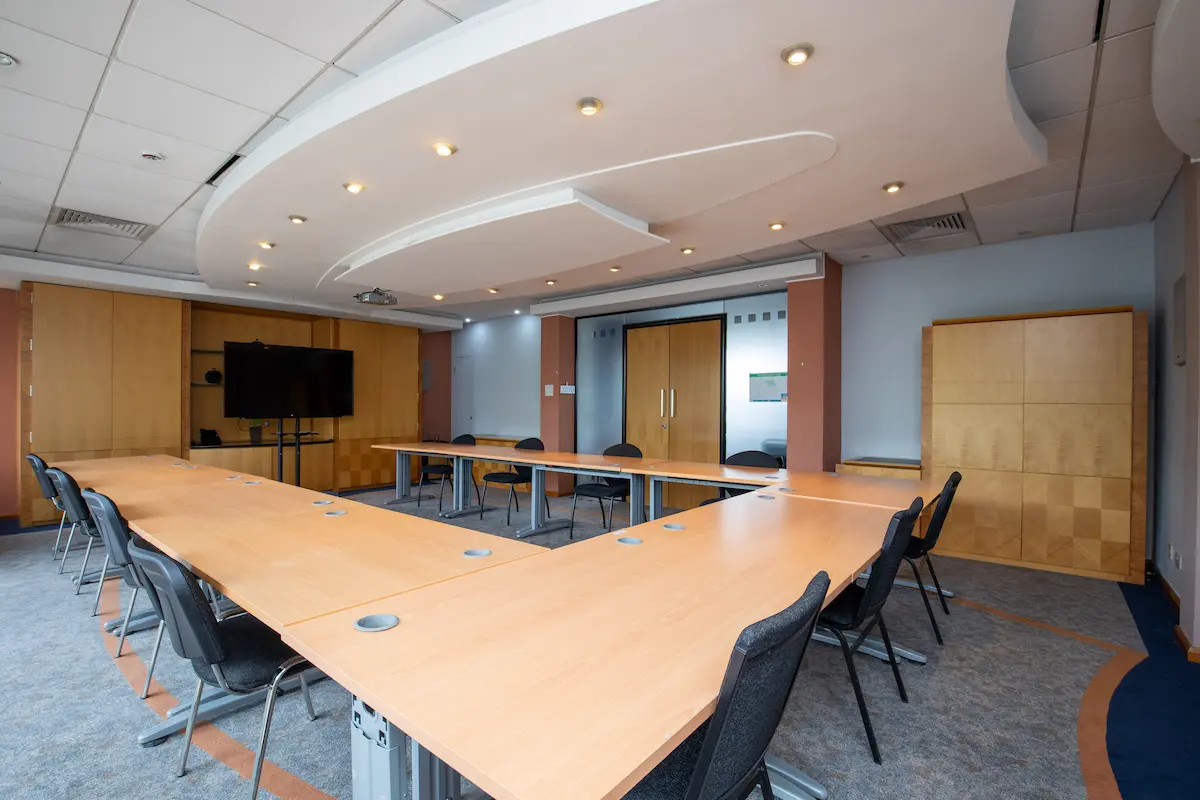 By the dayMeeting and training rooms
Booked as you need them, with no term and no notice to serve.
Hire a meeting room by the day →
By the dayMeeting and training rooms
Booked as you need them, with no term and no notice to serve.
Hire a meeting room by the day →
What it costs at Alexandra Gate
Guide bands only. All exclude VAT, and current availability and pricing should be confirmed with the centre. Introductory offers are available, subject to the terms and length of agreement.
- 1 to 2 people: roughly £250 to £450
- 2 to 3 people: roughly £400 to £700
- 3 to 4 people: roughly £550 to £800
- 4 to 6 people: roughly £800 to £1,250
- 6 to 8 people: roughly £800 to £950, larger 7 to 8 person suites to roughly £1,400 to £1,600
- 8 to 12 people: roughly £1,500 to £1,800
Band by band, with the cost per desk worked out, in our breakdown of what a serviced office costs per month.
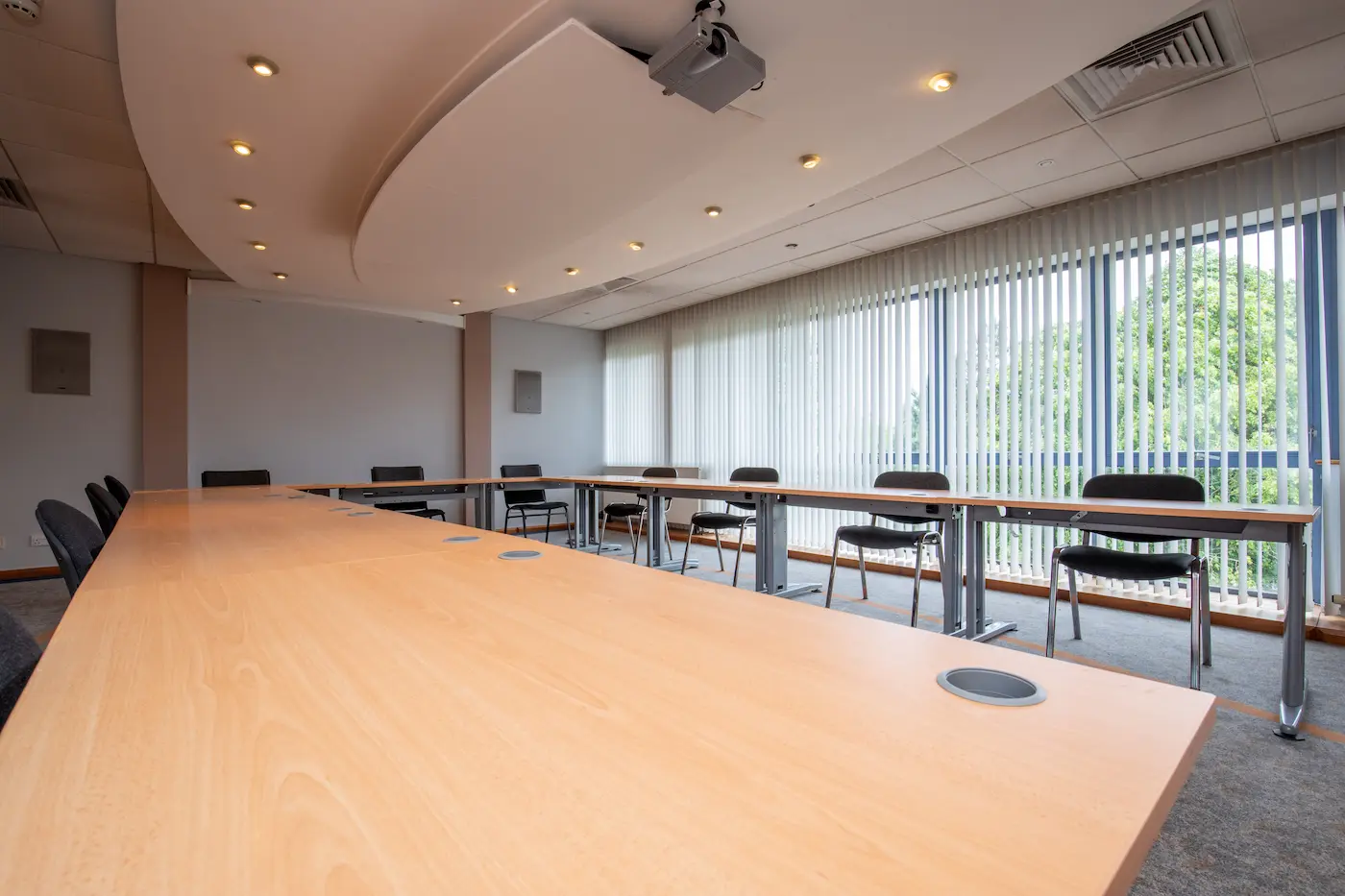 No term
Nothing to serve notice on
Meeting and training room hire starts from around £60 + VAT per day. Our modern boardroom, around 615 sq ft and seating up to 25, runs from around £100 to £200 + VAT per day. Book it, use it, walk away.
- Private floor with lift access
- Projector and whiteboards
- Free visitor parking
The fee covers a furnished, move-in-ready suite, 24/7 fob access, CCTV, daily cleaning, manned reception Monday to Friday from roughly 8:30am to 4:45pm, fibre broadband, and free on-site parking with no permit and no city-centre charges. Electric car charging, a cafe and a pet-friendly policy come as standard.
Where we are, and why it matters to your exit
Ffordd Pengam, Pengam Green, east Cardiff, roughly two miles from the city centre. The A48 Eastern Avenue is on the doorstep, M4 Junction 30 at Cardiff Gate sits north-east, and Ocean Park and the Cardiff Bay link road are just south. Newport Road Retail Park, Tesco Extra, fuel and cash points are a two-minute drive. We take teams from Cardiff Bay, Splott, Tremorfa, Rumney, Roath, Cathays, St Mellons and Cardiff Gate, plus Newport, Penarth, Barry, Caerphilly, Bridgend and the Vale of Glamorgan.
The exit connection is parking. A city-centre office without it forces a move the moment a team passes three or four cars. We do not have that problem, which is one less reason you would ever need to trigger an early exit at all.
FAQs
How much deposit should I expect to pay for a serviced office in Cardiff?
Roughly one to two months’ licence fee is typical, held against unpaid fees and damage beyond fair wear and tear. A newer company with no filed accounts may be asked for more. The conditions matter more than the figure: get the return window and the itemisation requirement into the agreement. Call 029 2089 4700 for our terms.
What is a normal notice period on a Cardiff office licence?
One month’s written notice is common on rolling monthly licences, one to three months on fixed terms. Ask when notice takes effect, not just how long it runs. Notice that can only expire on a quarter date is not really one month’s notice.
Can I break an office agreement early?
Only if the agreement allows it. A rolling licence ends on notice. A fixed term binds you for the balance unless there is a break clause, and breaks usually carry conditions such as all sums being paid and vacant possession given. Where an early exit is unavoidable, a negotiated surrender covering the void period is common. Moving to a different suite in the same building is often cheaper.
Does an office licence give me security of tenure?
Usually not. A licence is permission to occupy rather than an interest in land, and it does not normally attract security of tenure under the Landlord and Tenant Act 1954 in the way a protected business lease can. That is the trade-off for flexibility. This is general information, not legal advice: take your own advice.
Can I keep my phone number if I move out of a serviced office?
Sometimes, and you need to establish it before you sign rather than on the way out. If the centre provides the number, ask whether it can be ported, how long that takes and what it costs. Broadband is different: the line belongs to the building, so budget lead time at your next office.
Four more things to settle before signature
Come and read the small print for yourself
We will send you our licence terms before you visit, not after. Read them at the kitchen table, mark them up, bring the questions. If something does not sit right, tell us and we will explain it or change it. That conversation is far easier with an owner-run centre than with a national brand.
Call 029 2089 4700, email info@alexandragate.co.uk, or use our contact page and we will come back with real availability, a guide price and the agreement itself. Bring the checklist. We would rather answer fifteen awkward questions now than have one awkward conversation later.
Fifteen awkward questions now beats one awkward conversation later.
Check the facilities and amenities →All figures are guide bands and exclude VAT. Current availability, pricing and licence terms should be confirmed with the centre. This article is general guidance and not legal advice.
